



Nobel Laureate Peter Howitt: The Most Important Thing in the Future is Not Having the "Safest Job."
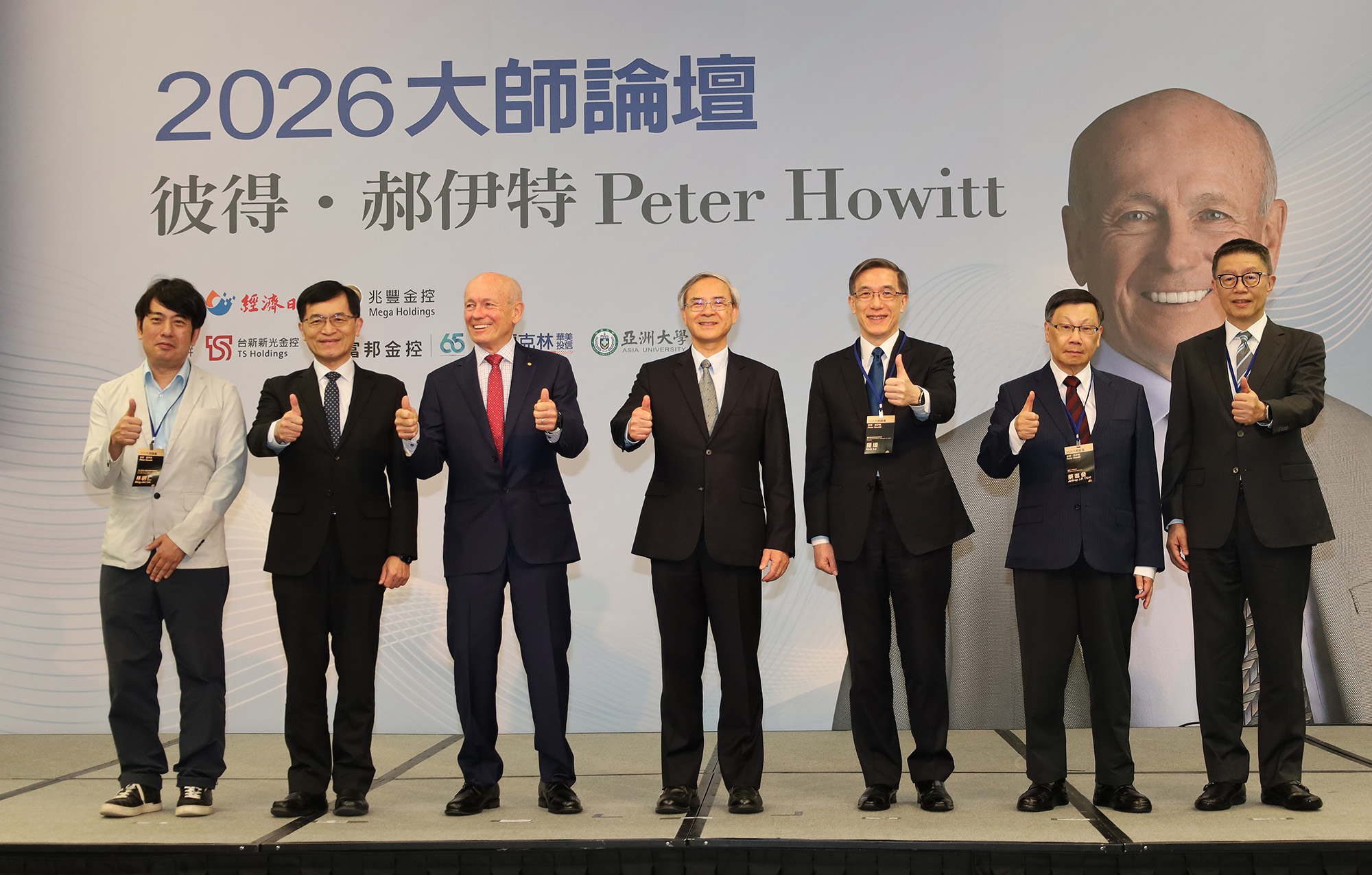 AU President Jeffrey J.P. Tsai (2nd right) attends the 2026 Master Forum, joining Nobel Laureate Peter Howitt (3rd left) and other distinguished guests for a group photo.
The 2026 Master Forum grandly opened today at the Taipei International Convention Center (TICC). Professor Peter Howitt, a 2025 Nobel Laureate in Economics and a giant of modern growth theory, was invited to engage in a top-tier dialogue with faculty and students from Asia University (AU), transcending borders and generations. AU President Jeffrey J.P. Tsai led a diverse delegation—comprising local and international students from India, Indonesia, Vietnam, Mongolia, Eswatini, and Taiwan, alongside students from strategic alliance high schools—to conduct an all-English intellectual debate on creative destruction and social equity in the age of AI. This intellectual feast not only showcased AU’s profound strength in promoting higher education internationalization but also provided a rare opportunity for Taiwanese youth to connect directly with world-class scholars and foresee the future.
Centered on the theme of Creative Destruction and Economic Growth, Peter Howitt’s keynote speech analyzed how technological innovation drives economic growth and addressed the challenges facing global industrial and talent structures in the AI era. Following the speech, AU faculty and students engaged in an hour-long discussion with Professor Howitt, covering topics ranging from AI, education, and semiconductors to financial markets, entrepreneurship, and social equity.
At the start of the session, President Jeffrey J.P. Tsai remarked that the world is currently facing a new revolution brought by AI, stating, "It is the worst of times, and it is the best of times." He pointed out that while AI may indeed replace certain jobs—as seen in the layoffs at tech giants like Google and Meta—it is also rapidly accelerating scientific breakthroughs and industrial innovation. President Tsai noted that the 2024 Nobel Prize winners in Physics and Chemistry both utilized AI to solve complex scientific problems. He further cited NVIDIA CEO Jensen Huang, who mentioned that an IC design task that previously required eight engineers and ten months can now be completed by AI overnight.
In response to the AI wave, President Tsai explained that Asia University has actively reformed its general education in recent years, introducing X + AI, AI + X, and AI + Social-Emotional Learning (SEL) courses. The goal is not merely to teach students how to use AI, but to cultivate the core competencies that AI cannot replace, including empathy, creativity, cross-disciplinary integration, and humanistic critical thinking.
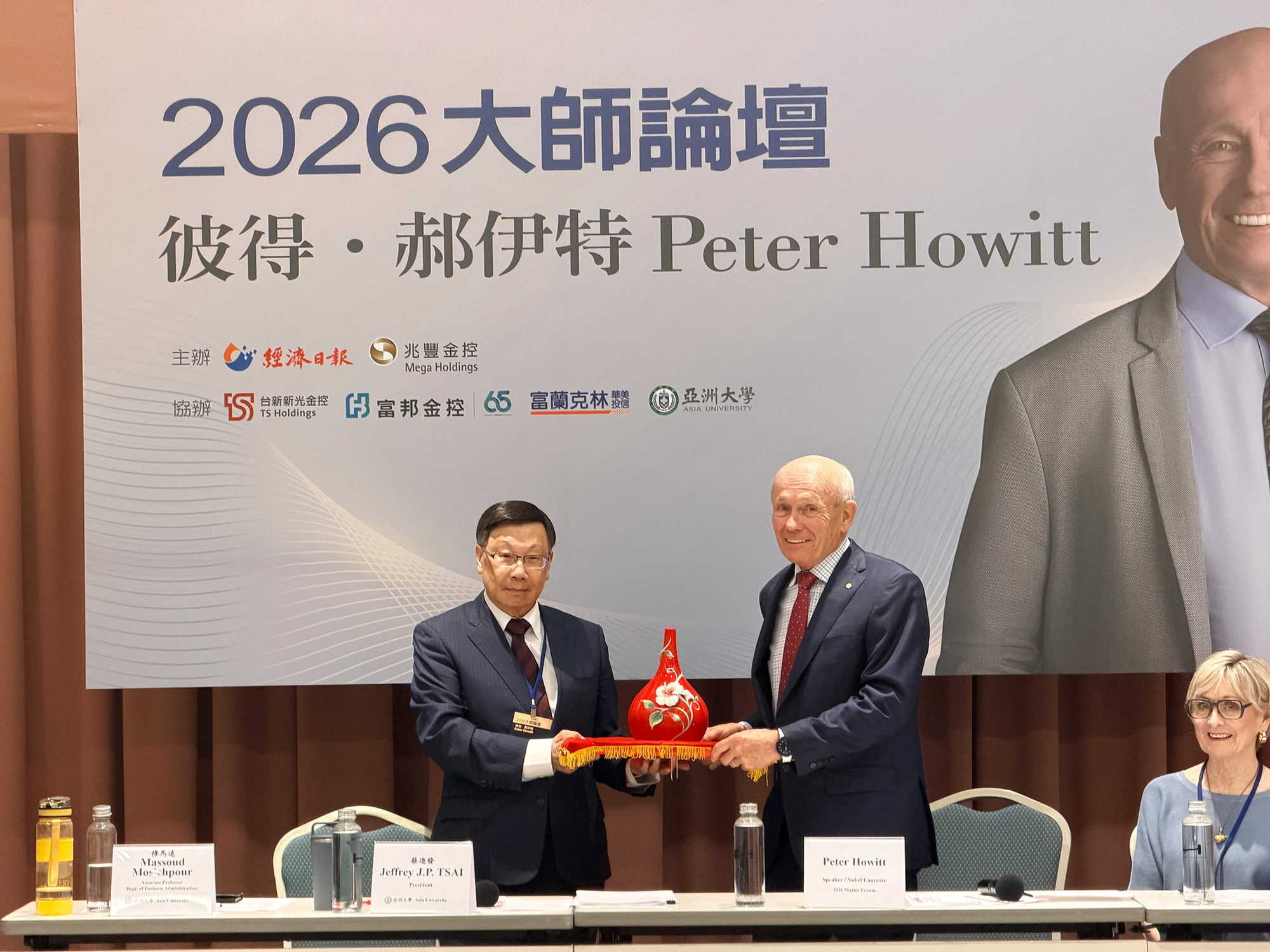 AU President Jeffrey J.P. Tsai (left) presents an exquisite souvenir to express his gratitude to Nobel Laureate Peter Howitt (right) for his visit and exchange.
The student discussants hailed from India, Indonesia, Vietnam, Mongolia, Africa, and Taiwan, showcasing Asia University's distinctive international campus environment. Several students referenced Peter Howitt's theories on "creative destruction" and human capital, posing in-depth questions regarding industrial transformation in the age of AI.
Ankita, a doctoral student in Business Administration from India, asked how governments should formulate policies to balance innovation and governance when AI development outpaces regulation. Peter Howitt responded that while legal and regulatory systems are often slow to react, AI technology advances at lightning speed. He noted that a quick solution may be unlikely in the short term, and for now, much still depends on the moral conscience and social responsibility of tech industry leaders.
Suman, another Indian doctoral student, approached the topic from behavioral factors such as trust, perceived complexity, and expectation confirmation to explore how AI affects innovative growth. Peter Howitt stated that AI will ultimately enhance human creativity and various capabilities. He cited Bill Gates' investments in using AI to improve medical efficiency in Africa, where automating routine tasks allows healthcare workers to serve more patients, demonstrating AI's immense potential for public welfare.
Regarding the balance between innovation and equity, Larry, a Financial Laws student at Asia University, asked how legal and institutional frameworks can balance economic efficiency, innovation, and fairness amidst rapid technological change. Peter Howitt argued that the education sector bears a heavy responsibility to utilize AI in cultivating correct values. He candidly remarked that current educational systems remain among the "least innovative sectors" and must undergo fundamental reform.
Addressing the high-barrier competition in AI and semiconductors, Andrew, a graduate student in Finance from Vietnam, asked if this would make it harder for developing nations to catch up. Peter Howitt contended that, unlike the previous computer revolution which favored high-skilled talent, AI leans more toward automating routine cognitive tasks, which may actually have the chance to elevate the capabilities of workers in developing countries. In the future, nations can share AI knowledge and resources through international cooperation and technical alliances.
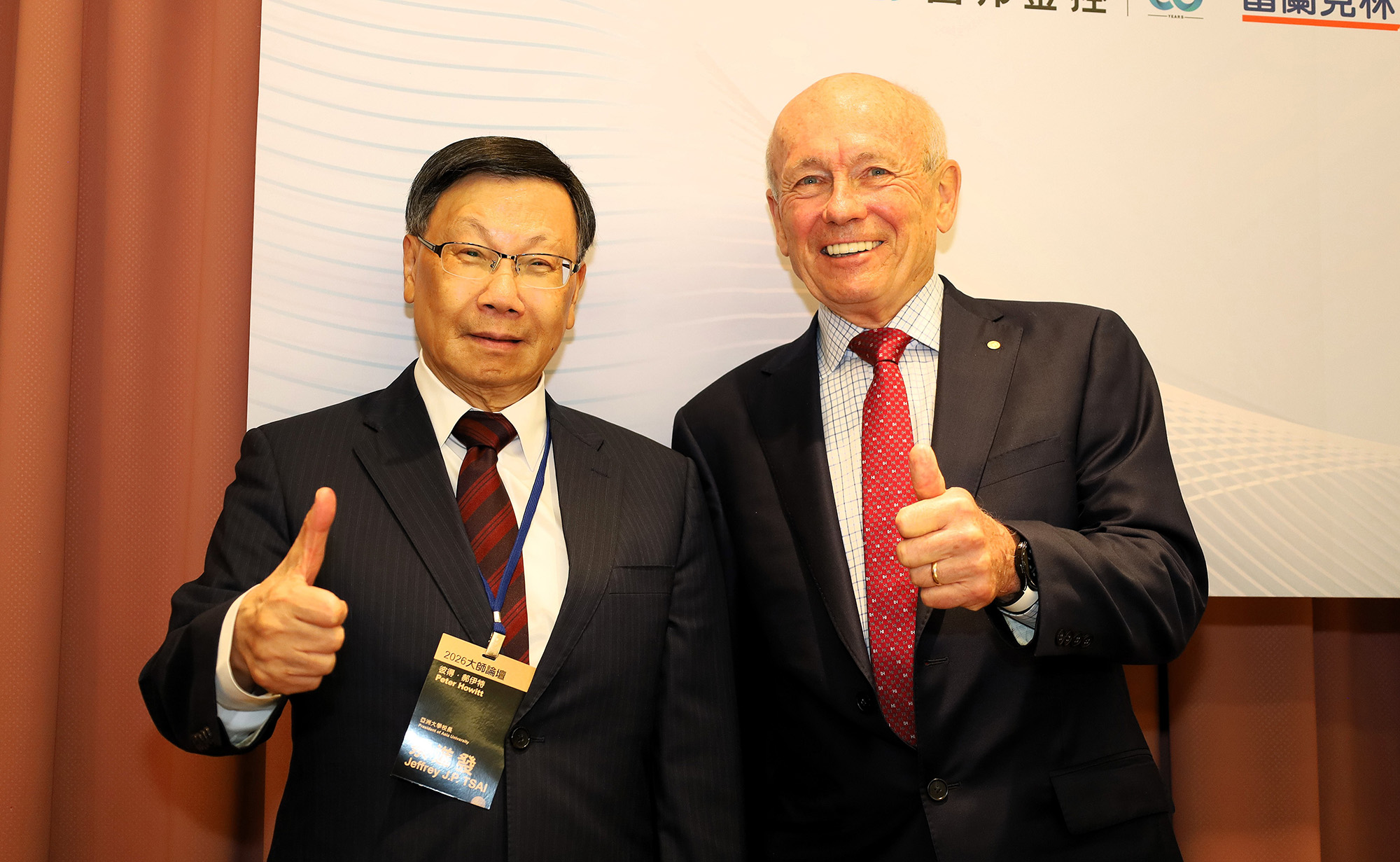 AU President Jeffrey J.P. Tsai (left) and Nobel Laureate Peter Howitt (right) meet in a warm exchange, engaging in a spirited discussion on AI and the development of higher education.
Many students also focused on whether AI will replace entry-level jobs. Floria, a master’s student in Accounting and Information Systems at Asia University, asked how young people can accumulate core competencies that AI cannot replace during the transition period when old jobs disappear but new roles have yet to mature. Peter Howitt stated that claims by many tech companies regarding the disappearance of entry-level jobs are often exaggerated. He noted that companies still need employees to accumulate tacit knowledge through practical work—a capability that remains difficult for AI to fully replicate.
Additionally, Faye, a Finance student, asked how the next generation of economists and entrepreneurs should balance the gains from innovation against inequality and job loss. Citing Denmark’s flexicurity model as an example, Peter Howitt pointed out that future governments will need to implement new tax and subsidy systems to ensure that the benefits brought by AI are shared by more people.
The questions posed by two high school students also became a highlight of the event. Calvin from the Affiliated Senior High School of National Chung Hsing University (SHCH) asked whether the excessive concentration of wealth and resources among a few elites due to innovation would lead to populism and social discontent. Peter Howitt admitted that the concentration of innovative gains could indeed foster anti-elite sentiment. Therefore, governments must use wealth redistribution systems and the support of educational institutions to allow more people the opportunity to share in the fruits of technological progress.
Vivi from Changhua Girls' Senior High School focused on how young people should accumulate the experience and judgment needed for the future as AI gradually replaces a large amount of learning and basic work tasks. Peter Howitt responded that it is impossible for large corporations to completely eliminate entry-level positions. However, he emphasized that universities must become more proactive in vocational education and collaborate with enterprises to redesign curricula, enabling students to gain practical skills and tacit knowledge while still in school. He stressed that tripartite cooperation between the government, the private sector, and academia will be the key to talent cultivation in the AI era.
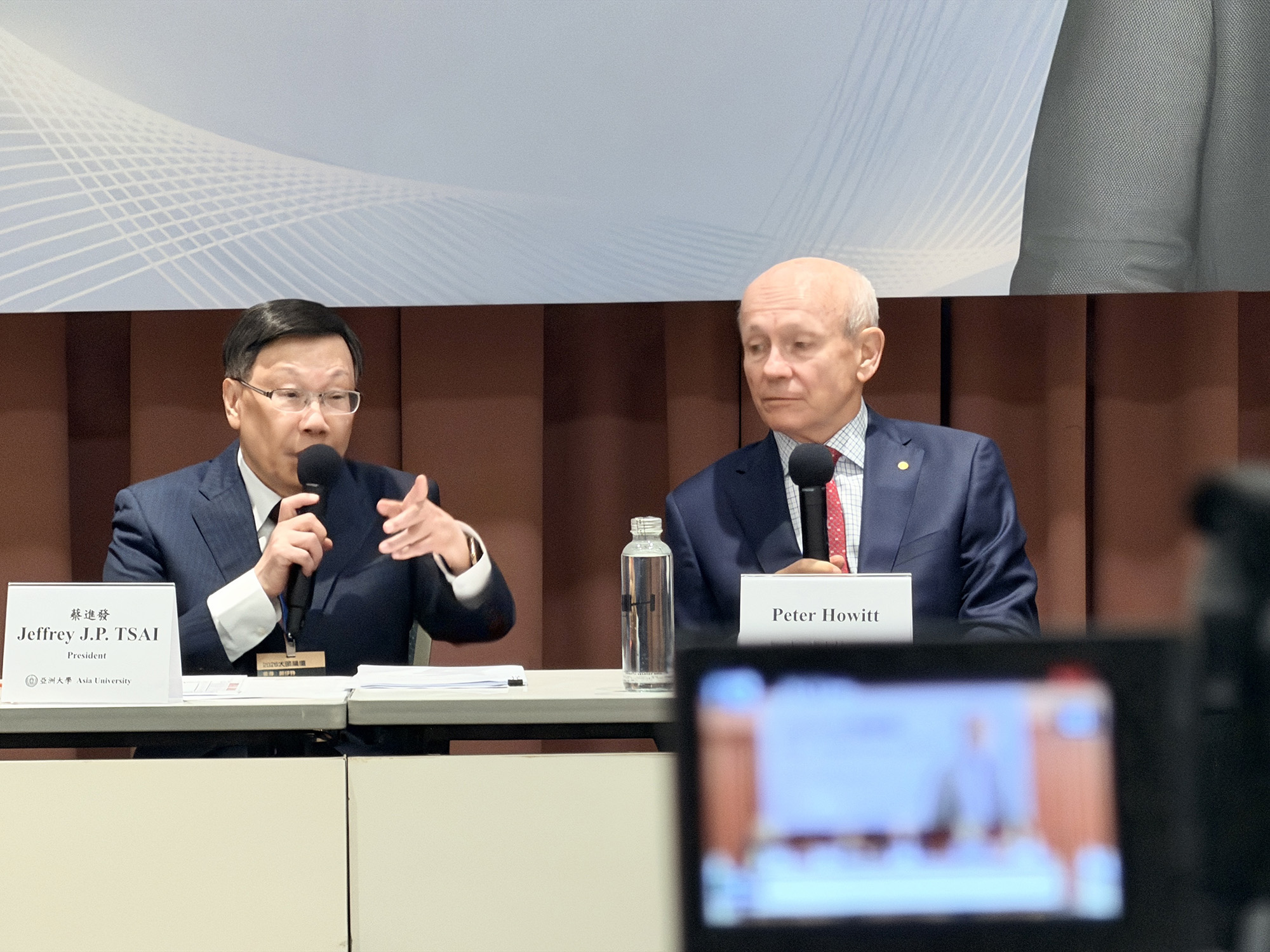 AU President Jeffrey J.P. Tsai (left) and Nobel Laureate Peter Howitt (right) exchange views during the forum.
Hanif from Indonesia raised a question on how to prevent AI from becoming a tool for large corporations to hinder competition and innovation. Peter Howitt emphasized that governments must establish robust competition laws and antitrust policies focused on dynamic efficiency to prevent companies from stifling startup creativity through patent monopolies or acquisitions. Citing Eastman Kodak, the inventor of the digital camera, as an example, he pointed out that companies that resist the next wave of innovation will eventually be phased out by the times.
Maria, another student from Indonesia, followed up by asking if creative destruction would be slowed if corporations use AI to protect their dominance rather than embrace disruption. Peter Howitt stated that the real danger lies in large firms hindering innovation by new companies through preemptive acquisitions or the creation of patent thickets. Therefore, antitrust policies should place greater emphasis on dynamic efficiency.
Furthermore, Minjin from Mongolia expressed concern over whether AI would weaken the entrepreneurial discovery capabilities of financial markets. To this, Peter Howitt replied that while AI can assist in general financial decision-making, the truly critical aspect of financing innovation still requires a high degree of human judgment. This includes understanding technology, talent, and trust—elements that are the most difficult for AI to fully replace.
At the conclusion of the session, Dr. Ming-Huei Chen, Dean of the College of Management and the College of Humanities and Social Sciences at Asia University, asked Peter Howitt for advice for the younger generation entering the workforce. Howitt remarked with a smile, "If I could choose an era to be born in, I would choose now!" He believes that although the future is filled with uncertainty and disruption, it also signifies more opportunities and a richer economic life.
He encouraged students not to make choices simply because a certain job "looks the safest," but rather to find something they are truly passionate about and commit to it fully. He emphasized that AI will profoundly transform the world and create many new professions and opportunities that are unimaginable today. "Your future," he concluded, "is actually very much to be envied."
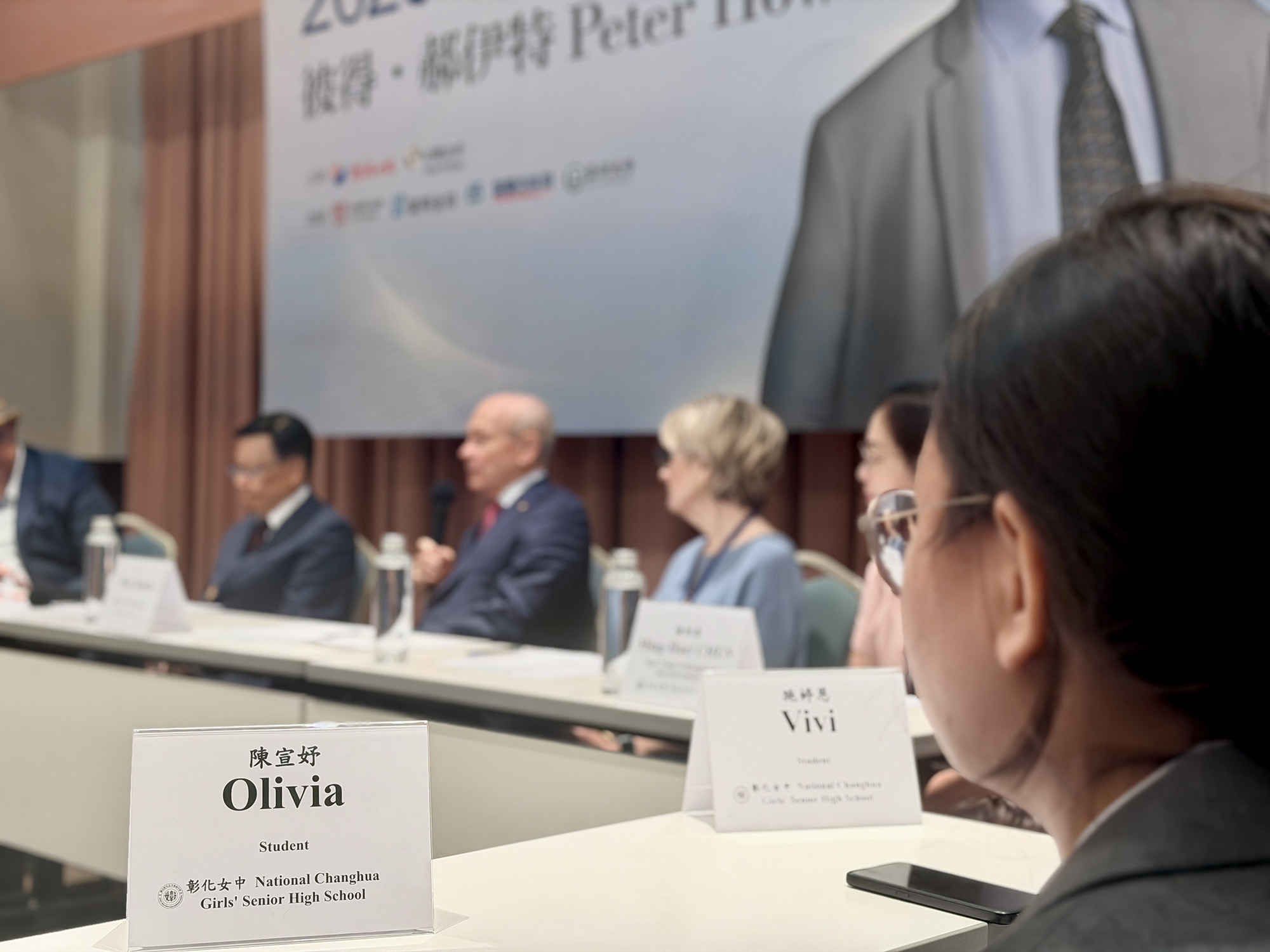 High school student Vivi, from one of Asia University’s strategic alliance schools, expressed concern regarding how young people can accumulate experience in the AI era.
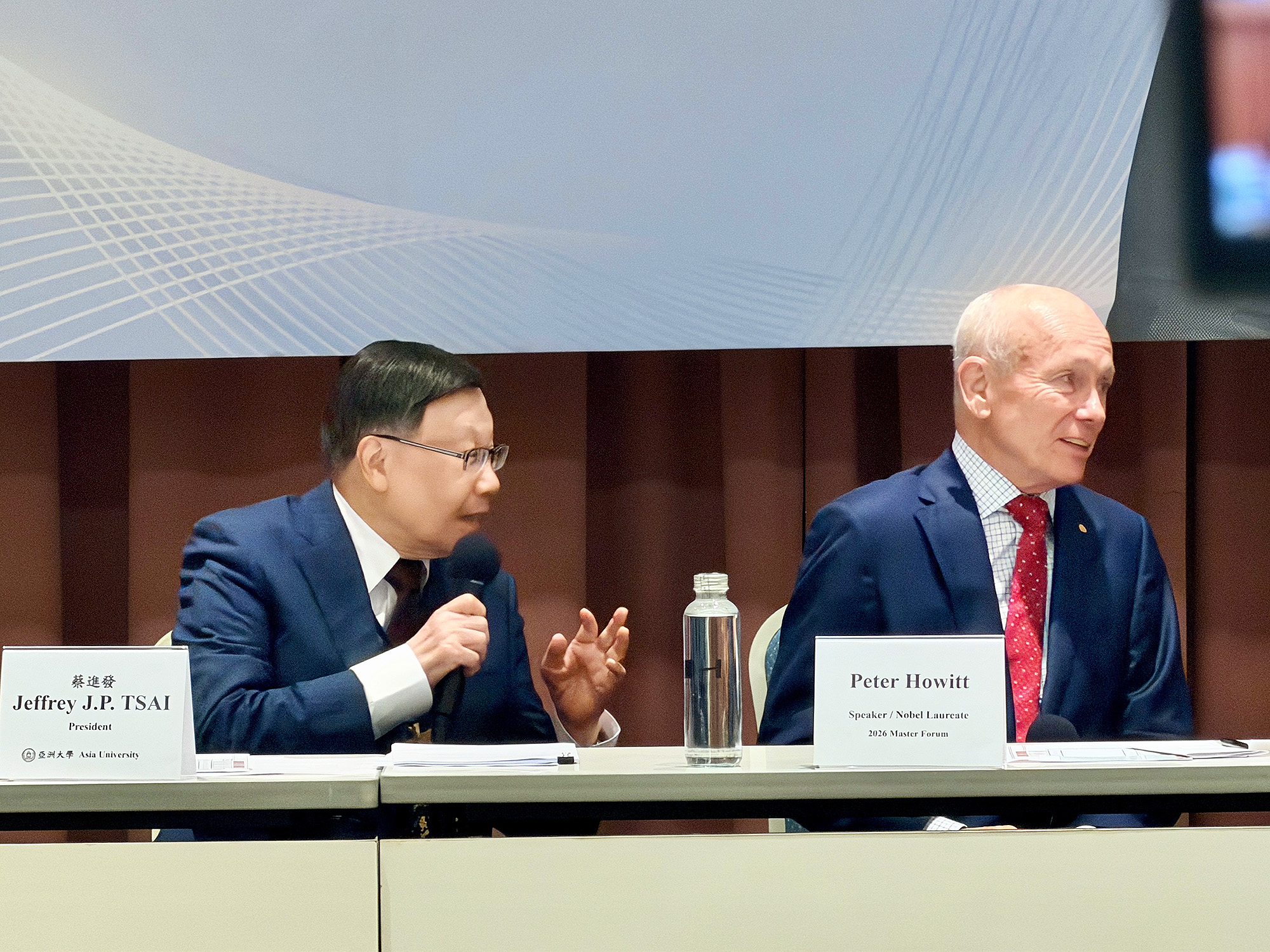 AU President Jeffrey J.P. Tsai (left) and Nobel Laureate Peter Howitt (right) listen intently to questions from the students.
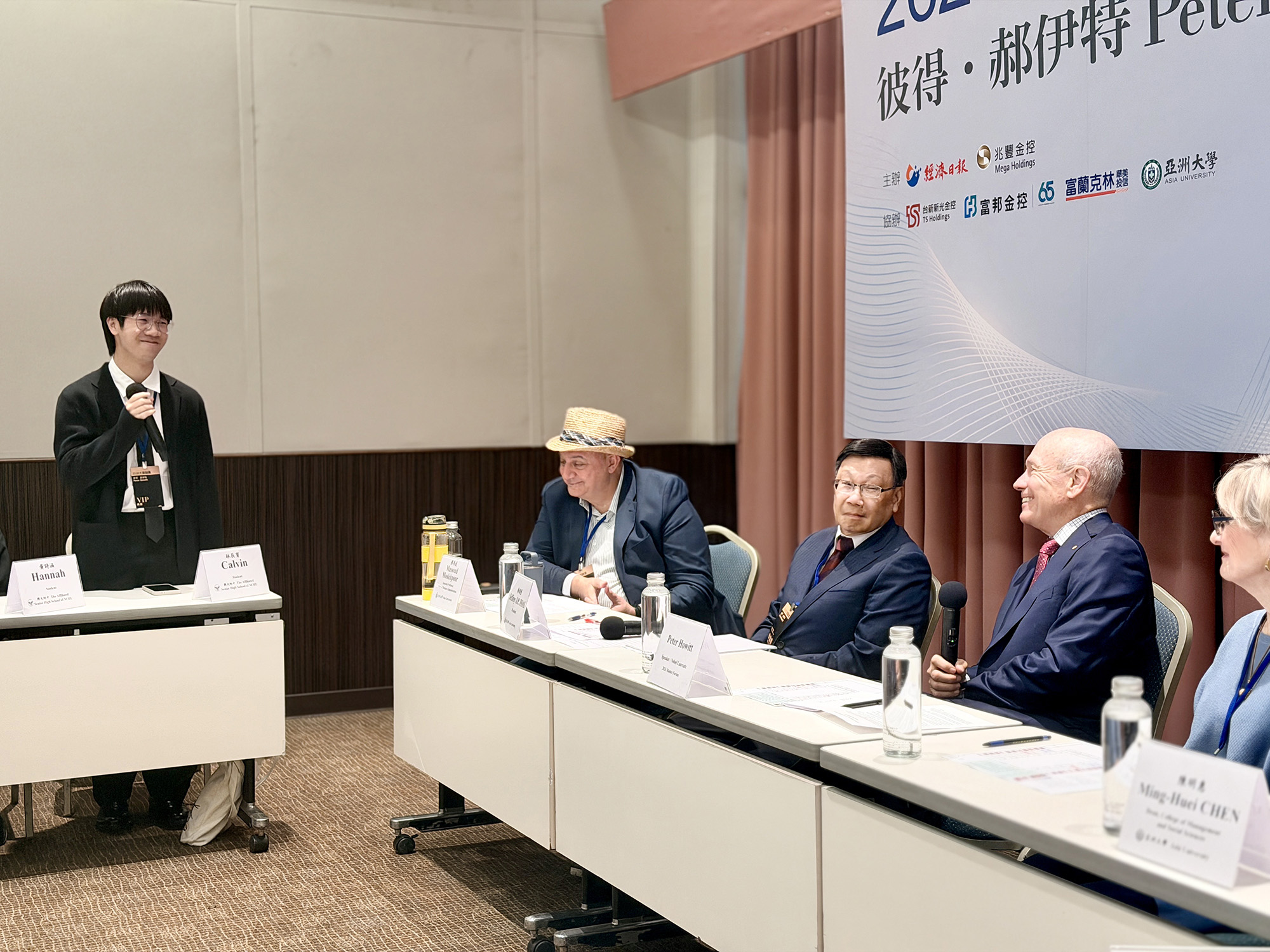 High school student Calvin, from one of Asia University’s strategic alliance schools, consults Professor Peter Howitt on the issues of wealth concentration and populism.
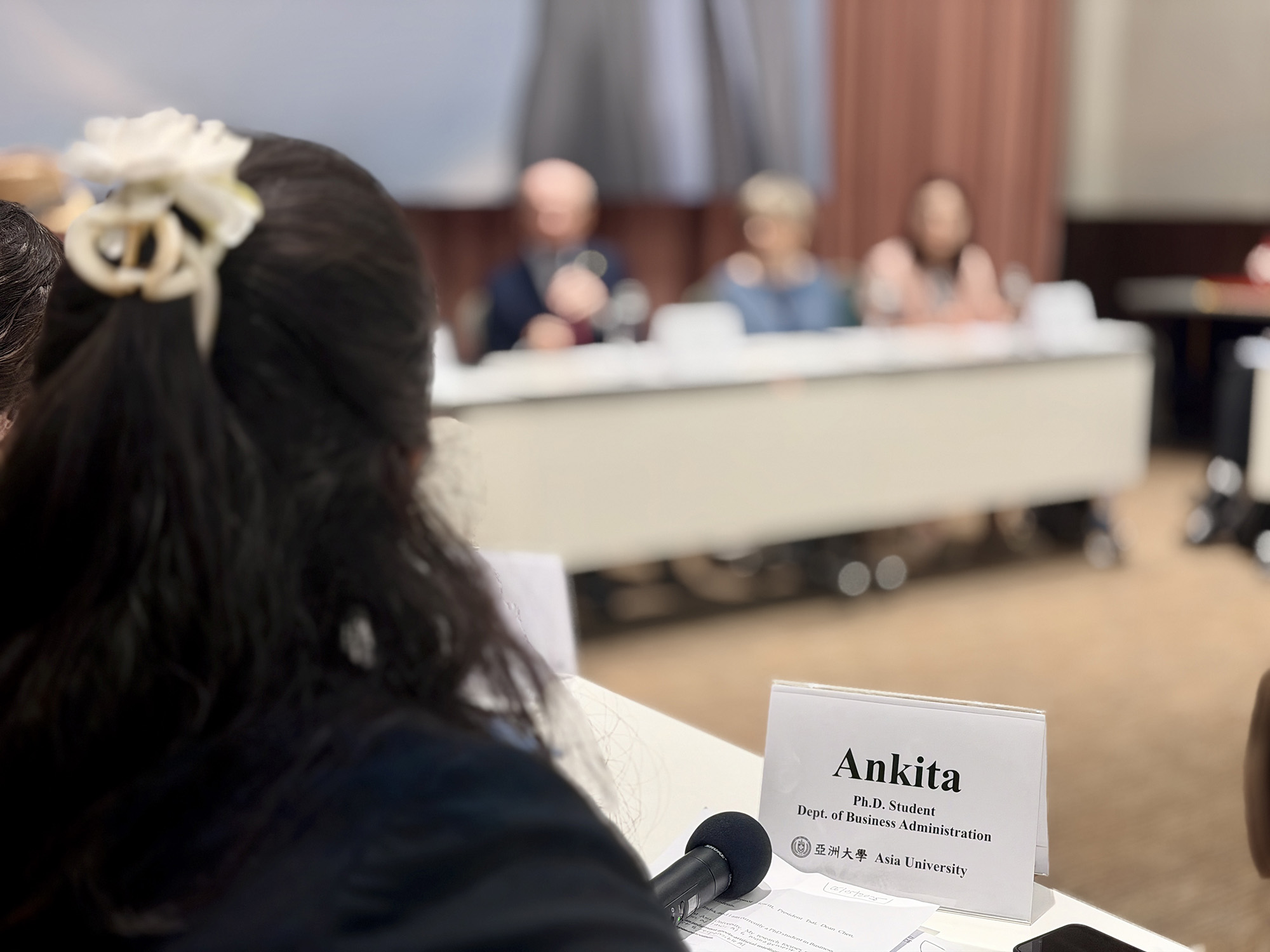 Ankita, an Indian doctoral student at Asia University, listens intently as she prepares to pose a question to Nobel Laureate Peter Howitt.
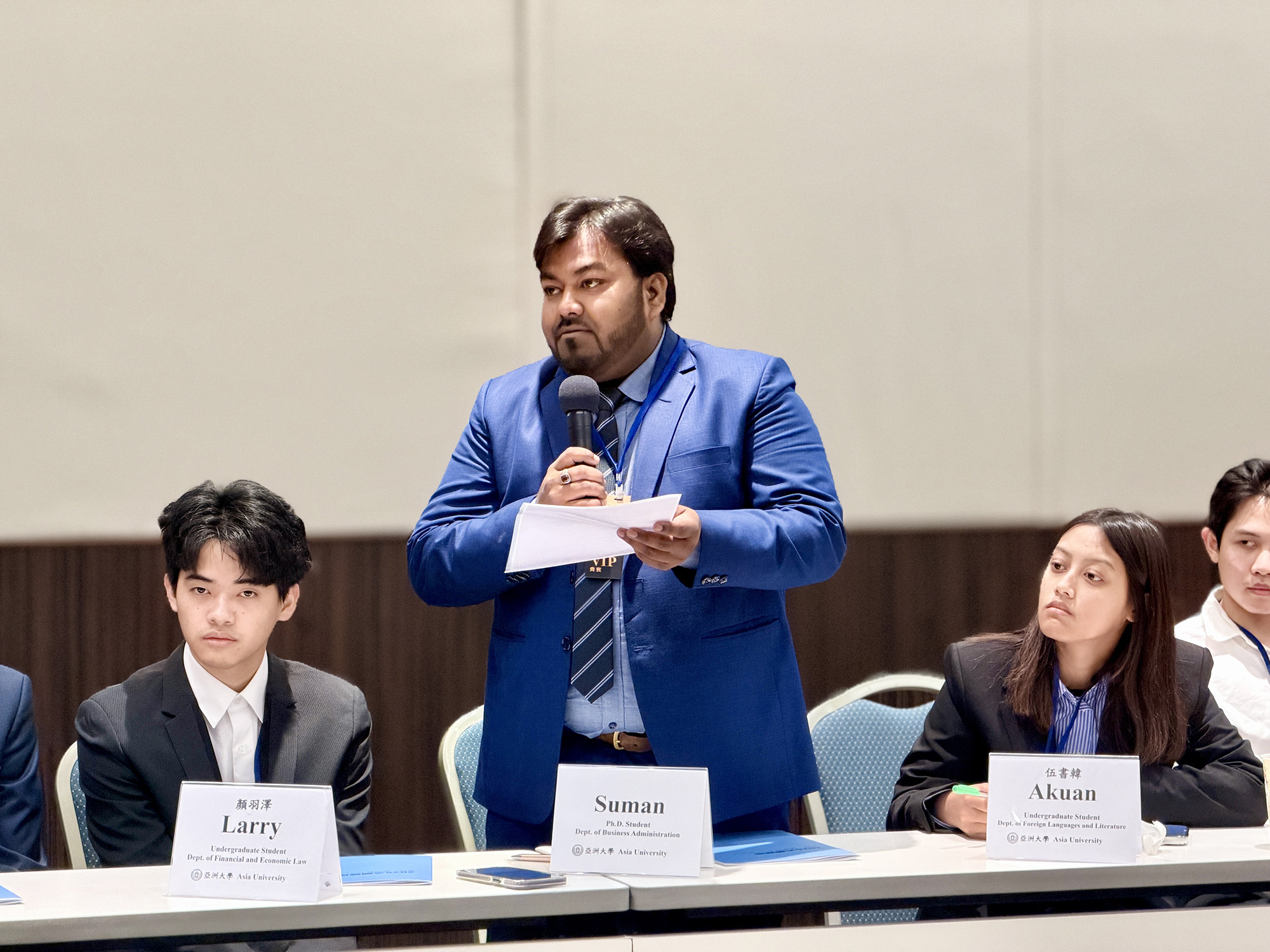 Suman, an Indian doctoral student at Asia University, presents profound insights on the theory of "Creative Destruction" to the master.
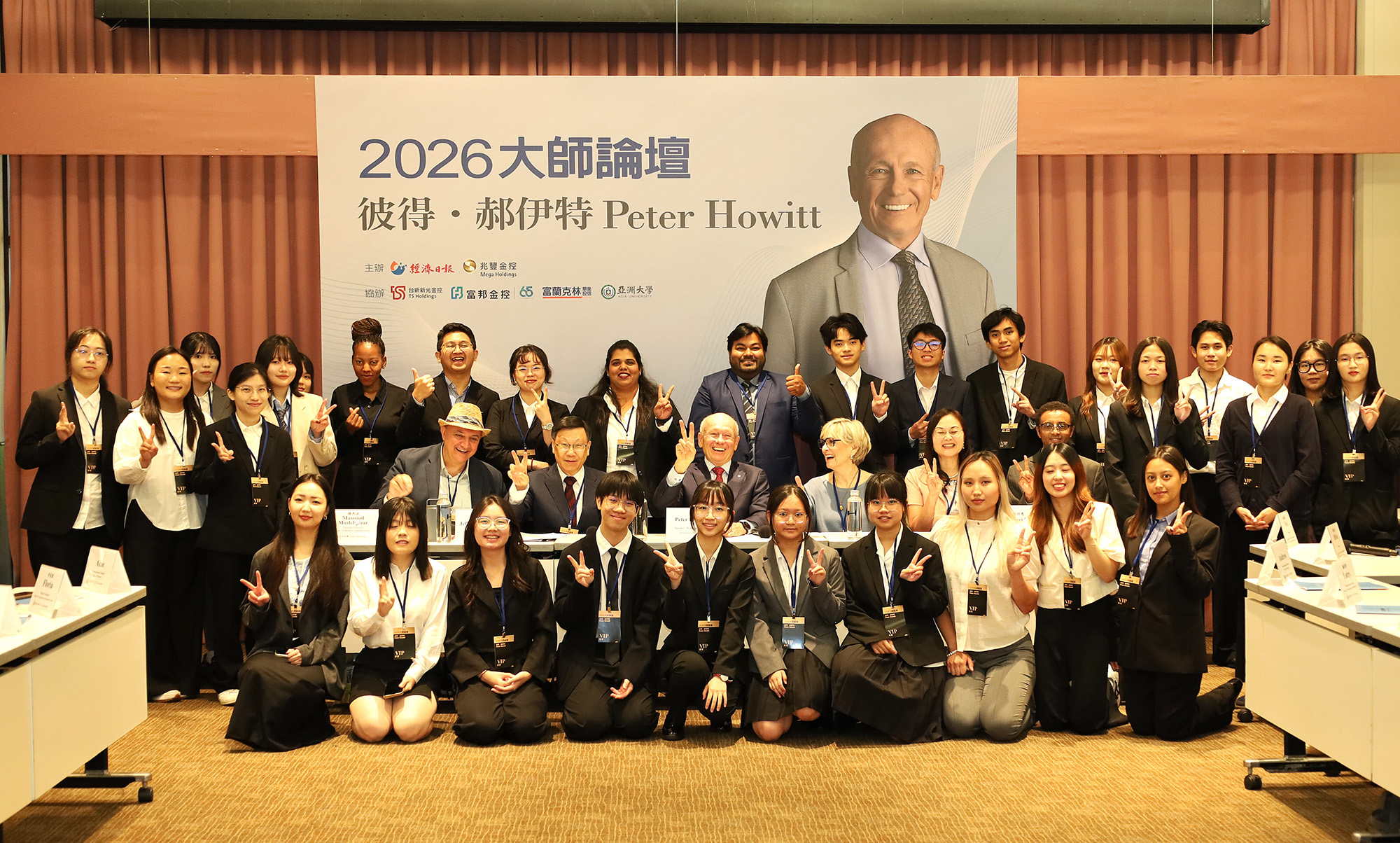 AU President Jeffrey J.P. Tsai and Nobel Laureate Peter Howitt join faculty and students for a group photo following the discussion session.
