




Assisting Users in Navigating Campus and Hospital Environments, Marking a New Milestone in Smart Campus and Smart Healthcare
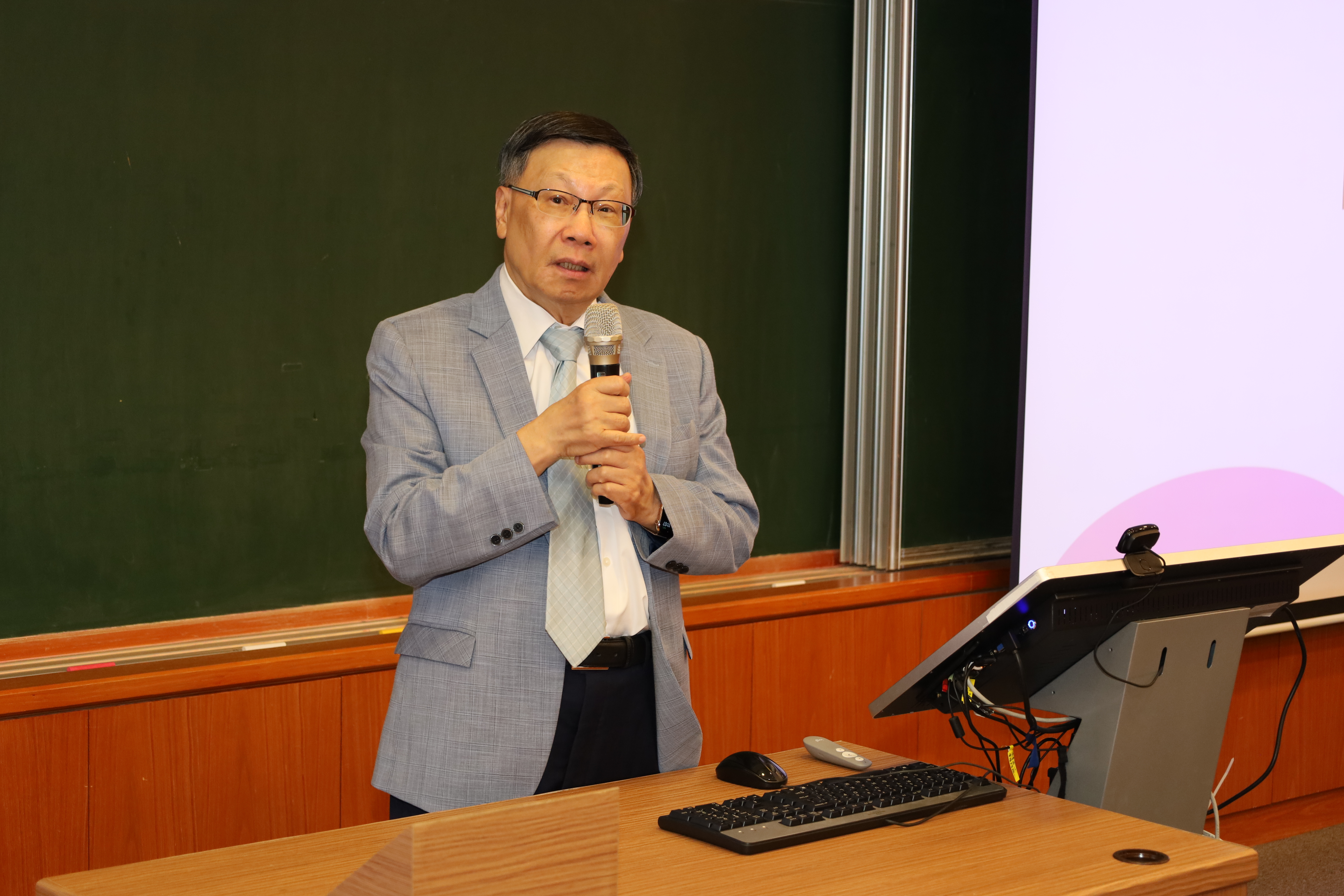 President Jeffrey J.P. Tsai of Asia University noted that the “Asia University Campus and Affiliated Hospital Smart Navigation System” is a pioneering initiative in Taiwan.
Asia University has developed the “Asia University Campus and Affiliated Hospital Smart Navigation System,” which was officially launched on the 5th in a ceremony presided over by AU President Jeffrey J.P. Tsai and Asia University Hospital Deputy Superintendent Chou Li-Wei. This “The Way AI Navigator” integrates digital mapping with intelligent interactive features to provide a new navigation service that helps freshmen and visitors quickly familiarize themselves with the campus, significantly enhancing the overall guidance experience. The system also extends to Asia University Hospital, offering intuitive medical navigation that assists patients and their families in locating clinics and related medical units efficiently—marking a new milestone in promoting both a “smart campus” and “smart healthcare.”
President Jeffrey J.P. Tsai noted that this smart navigation service system is a pioneering initiative in Taiwan and has already been filed for patents in Taiwan, the United States, Europe, and several other regions. He emphasized that Asia University positioned itself as an “AI University” seven to eight years ago, integrating advanced AI applications across smart teaching, AI-assisted learning, and smart campus development. The newly launched smart navigation system features breakthrough technologies that make everyday campus life more convenient, showcasing AU’s innovation while demonstrating its commitment to supporting students, faculty, and visitors.
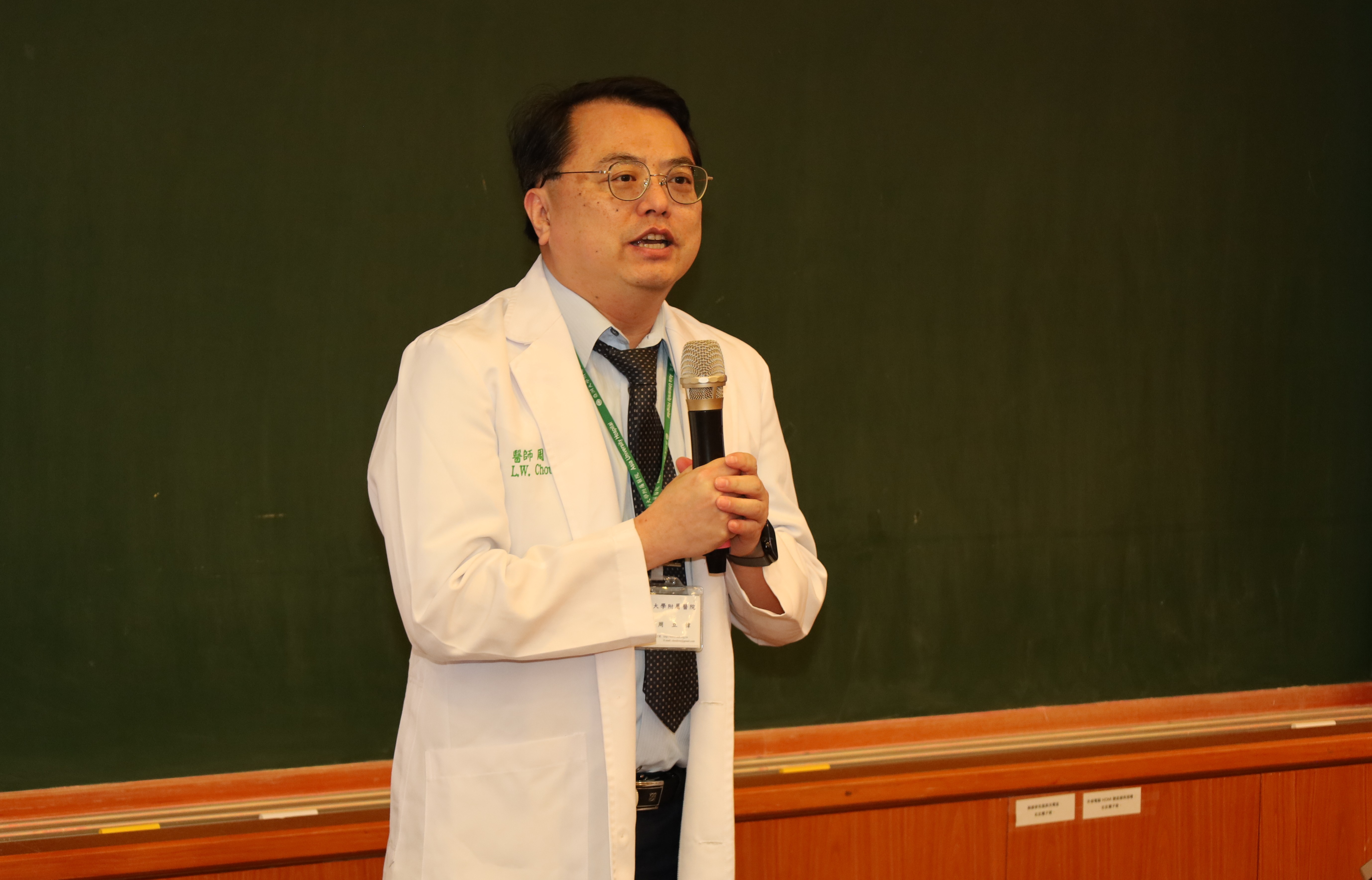 Asia University Hospital Deputy Superintendent Chou Li-Wei said that the smart navigation system provides significant assistance to patients and their families.
Asia University Hospital Deputy Superintendent Chou Li-Wei noted that since the hospital’s opening, it has continued to promote a patient-centered and friendly medical environment. Because the hospital’s departments are highly specialized and patients often need to complete multiple examinations and treatment procedures, many patients and their families may feel as though they are “walking through a maze” when navigating the hospital. Although signage and volunteers are available to provide guidance, integrating an intelligent navigation system can make the medical process smoother and aligns with the hospital’s direction toward becoming a smart hospital.
On the university campus, the “Asia University Smart Campus Navigation” platform integrates digital maps with interactive features, introducing two major highlights: the Green Campus Tour and the Navigation Robot. The system also launches the “Asia University Scenic Photo Wall,” which showcases campus sculptures, featured plant species, and seasonal landscapes through photos, captions, and short video clips. This allows students and visitors not only to find their way more easily but also to appreciate the university’s art, culture, and ecology. Route recommendations are additionally provided based on selected themes, offering users both practical guidance and a scenic exploration experience.
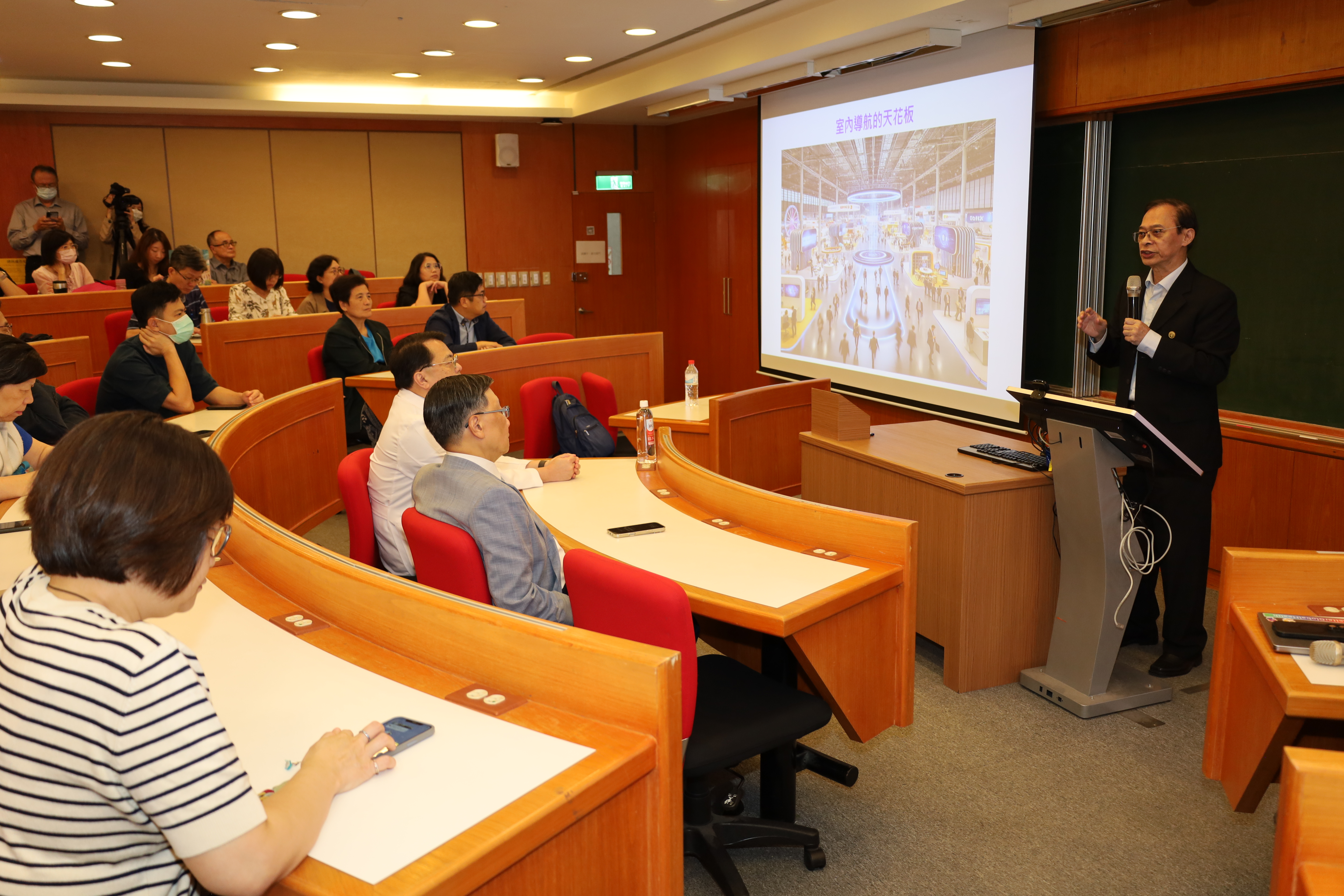 Asia University Chair Professor Hsu Wen-Lian (right) explained that the newly developed intelligent navigation system can be widely applied in exhibition venues.
Applied to Asia University Hospital, the system serves as a smart navigation assistant for patients and their families. Users can simply enter the name of the clinic or medical department through their mobile phones or the navigation platform, and the system will provide clear walking routes to help them locate their destinations more quickly, reducing both waiting and wayfinding time. One patient’s family member shared, “When bringing elderly parents for appointments, we no longer need to ask around. Just one tap on the phone shows us exactly where to go, making the whole process much more reassuring.”
Asia University Chair Professor Hsu Wen-Lian and Industry–Academia Director Wang Chao-Neng, who led the system’s development, pointed out that common navigation tools such as Google Maps often struggle with poor indoor signal reception and typically require costly hardware installations. In contrast, AU’s “The Way AI Navigator” only requires a floor plan for quick deployment, and its maintenance is extremely simple. To address the challenge of indoor navigation without hardware positioning—where the system cannot detect the user’s location—the design incorporates visual anchors. By having users identify the nearest landmark through a conversational interface, the system selects a navigation starting point and integrates this information into an interactive digital map. This transforms navigation into a true “guidance” experience and enables broad applications in tourism sites, museums, train stations, airports, and many other public venues. The system has already been adopted in several exhibitions and will soon be showcased at the Taipei International Travel Fair and the Information Technology Month Expo.
Director Wang further noted that the “Asia University Smart Campus Navigation” system will continue to evolve. Plans include expanding its coverage to local communities and additional public spaces, as well as introducing “Smart Real-Time Information” to keep users updated on campus events, transportation alerts, and urgent announcements. A new feature, “Campus Ecology Live,” will also be added, offering real-time streaming of the campus landscape and its seasonal changes.
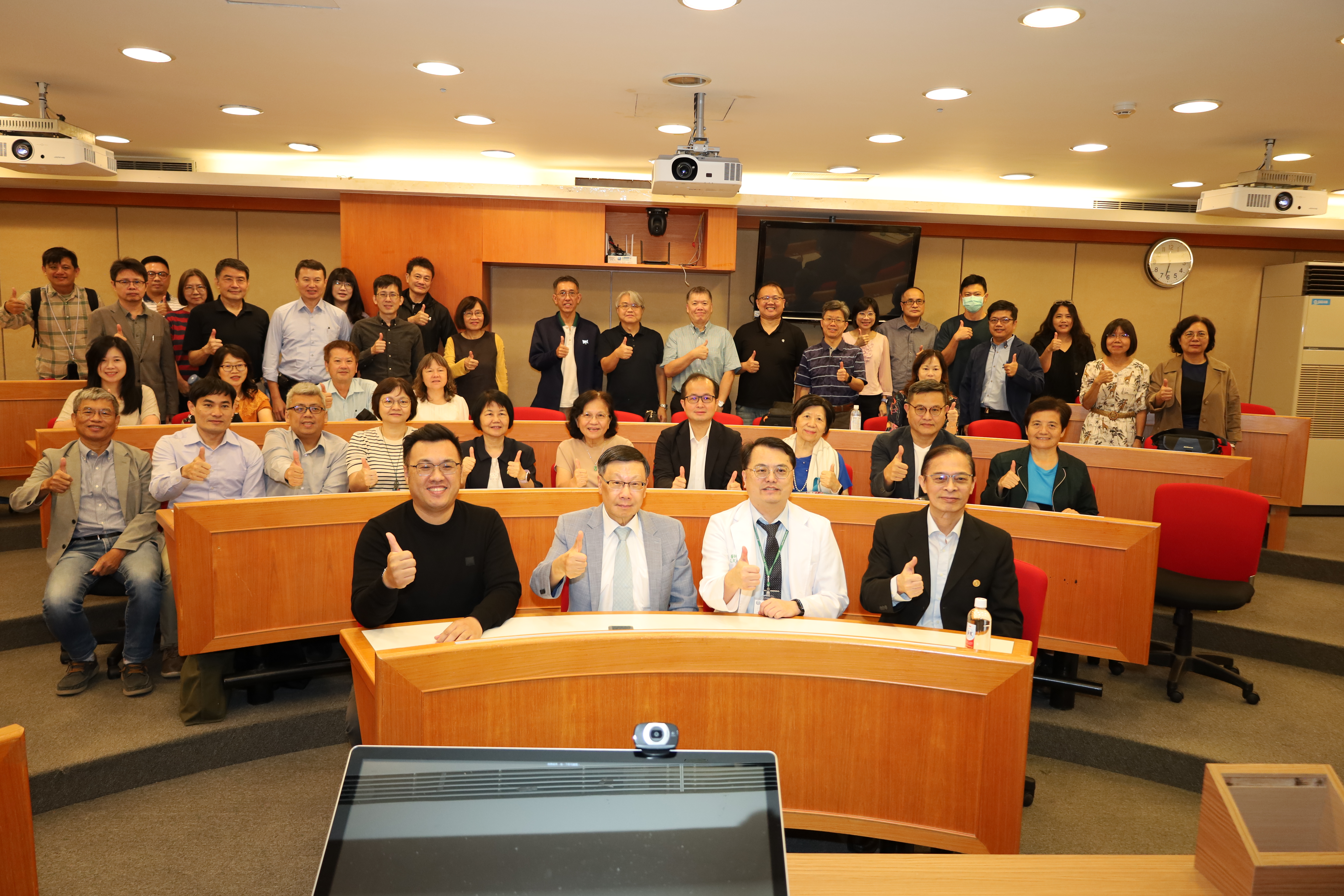
Asia University launched its “Smart Campus and Hospital Navigation System,” with President Jeffrey J. P. Tsai (2nd left), Asia University Hospital Deputy Superintendent Chou Li-Wei (2nd right), Industry–Academia Director Wang Chao-Neng (1st left), Chair Professor Hsu Wen-Lian (2nd right), and participating faculty members joining for a group photo.
