



With 375 Entries Depicting Life, Homeland, and the Future, the Event Showcases the Creative Vision of a New Generation
The winners of the 21st Asia University Literature Award have been announced. This year, a total of 375 entries were received across seven categories, including short stories, essays, modern poetry, photo essays ("Meeting the Beauty of Asia University"), science fiction, medical humanities fiction, and reportage ("Tales of My Homeland"). The themes of the works spanned campus life, memories of homeland, family emotions, tech-driven futures, and medical care. They not only showcased the students' nuanced observations of life experiences and social issues, but also reflected how the younger generation continues to use writing to explore themselves and contemplate the world in an era of rapid generative AI development.
Huang Shu-chen, Director of the Center for General Education at Asia University, noted that the Asia University Literature Award, now in its 21st year, has long cultivated campus literary creation and nurtured countless seeds of literature. She shared that she recently received a book gifted by a past award-winning alumnus, learning that the short story which won years ago had been expanded into a full-length novel and officially published. From a campus contest to official publication, this milestone demonstrates that the literature award is not just a competitive stage, but a vital starting point that accompanies students on their ongoing creative journeys. She hopes students will draw from their authentic life experiences, using words to record their growth and allowing creation to become a crucial pathway to knowing themselves and understanding the world.
Chen Zheng-ping, the coordinator for the Chinese literature category, pointed out that with the ubiquity of generative AI, the writing environment for students is facing new challenges and questions, even giving rise to a phenomenon where "works written too well are ironically suspected of being AI-generated." However, the most precious aspect of literary creation lies in the emotions and thoughts embedded within real-life experiences. Whether it is family memories, local culture, campus scenery, or imaginations of a future world, the inspiration must stem from the creator's own feelings and insights. This is the irreplaceable core value of literature. In today's world of increasingly mature AI tools, the importance of literary education has grown rather than diminished, prompting people to reconsider how writing carries memory, emotion, and thought.
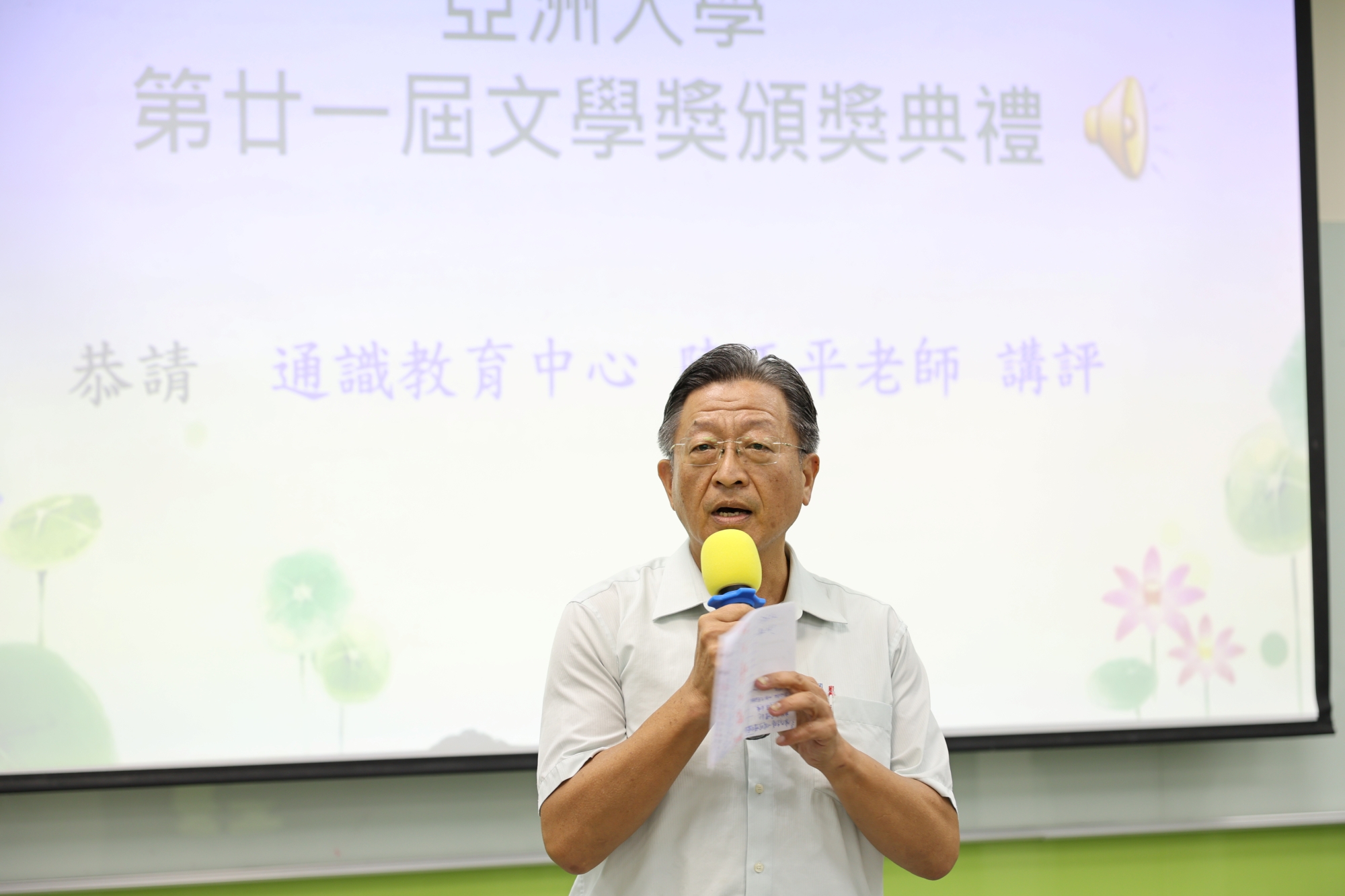 Professor Chen Zheng-ping, Coordinator of the Chinese Literature Category at the Center for General Education, delivers his commentary.
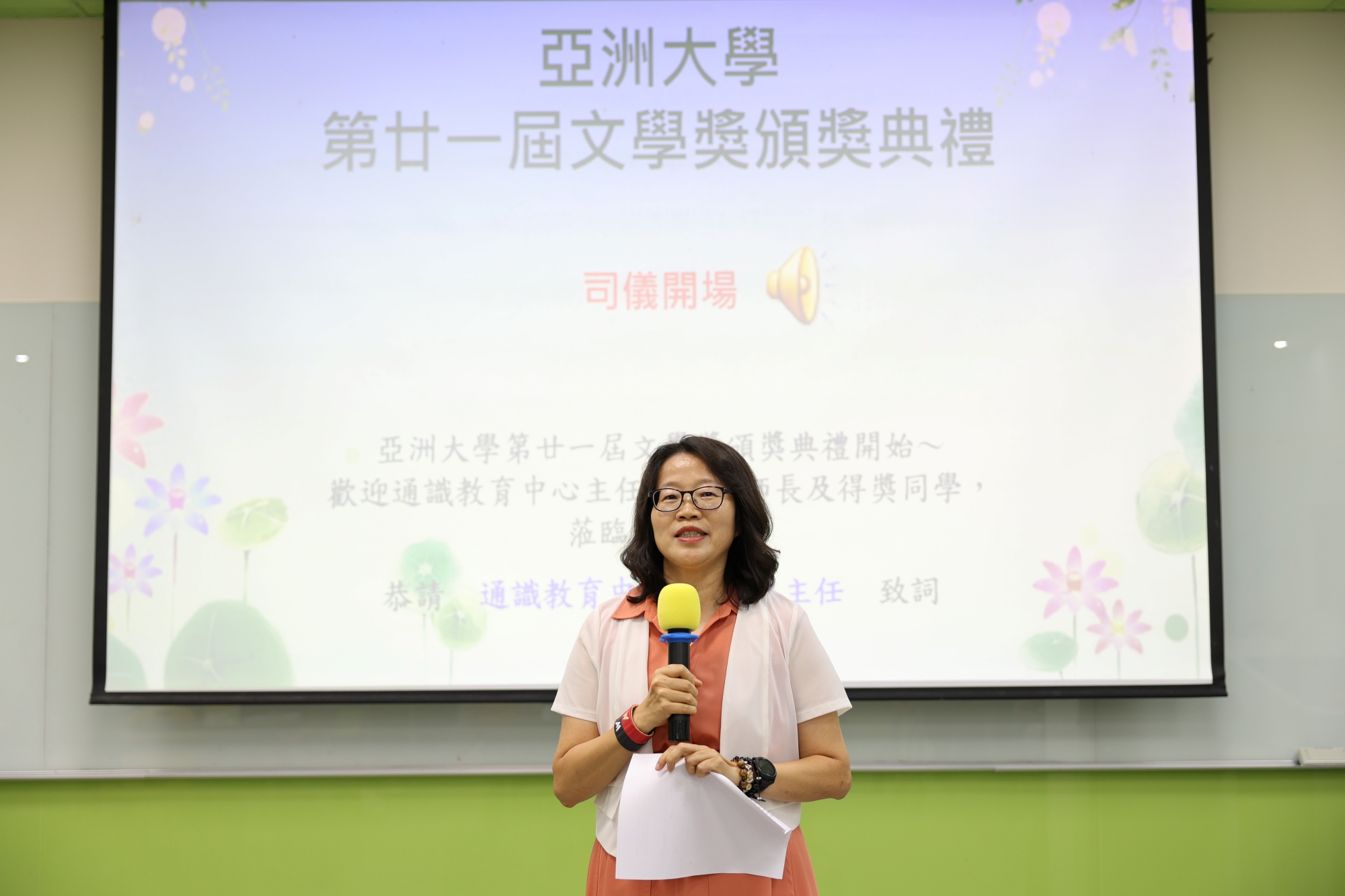 Huang Shu-chen, Director of the Center for General Education, delivers her remarks.
This year’s literature award continued its tradition of interdisciplinary judging. In addition to Chinese literature and history teachers, experts from fields such as commercial design, aesthetic education, information engineering, information communication, nursing, and occupational therapy were invited to participate in the review process, evaluating entries based on literary quality, professionalism, and innovation. The jury noted that the entries—whether through the plot development of short stories, the life narratives in essays, the refined language of modern poetry, or the local field investigations in reportage—all demonstrated the keen and sincere observational skills of the younger generation, reflecting how cross-disciplinary learning has become a hallmark of contemporary university students.
Notably, while past winners were predominantly freshmen, 9 out of the 35 awards this year were won by non-freshman students. In the short story category, all winners were sophomores or above. Li Yan-wei, a sophomore in the Department of Computer Science and Information Engineering, emerged as the biggest winner of the year, securing first prize in both the short story and essay categories. Zhou Yu-wei, a sophomore in the Department of Psychology, earned excellence awards in both categories as well. Both students were previous winners in the last literature award; their renewed recognition this year demonstrates stable and mature creative prowess. Furthermore, students like Li Yan-wei, Zhou Yu-wei, and Cheng Kai-yu from the Department of Nursing have won awards for two consecutive years, showing that the literature award has become a vital platform for students to sustain their writing and accumulate creative energy.
The story of Hou Jin-lai, a student from the Department of Long-Term Care and a winner in the science fiction category, was equally moving. Before retiring, he served as an electronic engineer in the pharmaceutical industry. Due to a respiratory illness, he chose to return to campus after retirement to gain more knowledge in self-care. Through science fiction, he explored the intersection of technological development and ultimate life issues, using creation to extend his reflections on life and embodying the spirit of lifelong learning.
Asia University President Jeffrey J.P. Tsai mentioned that the university will continue to use the literature award to encourage students to use sincere feelings, independent thinking, and rich imagination to write their own life stories and chapters of youth. The complete list of winners and work details can be found on the Asia University Center for General Education website at https://ged.asia.edu.tw/.
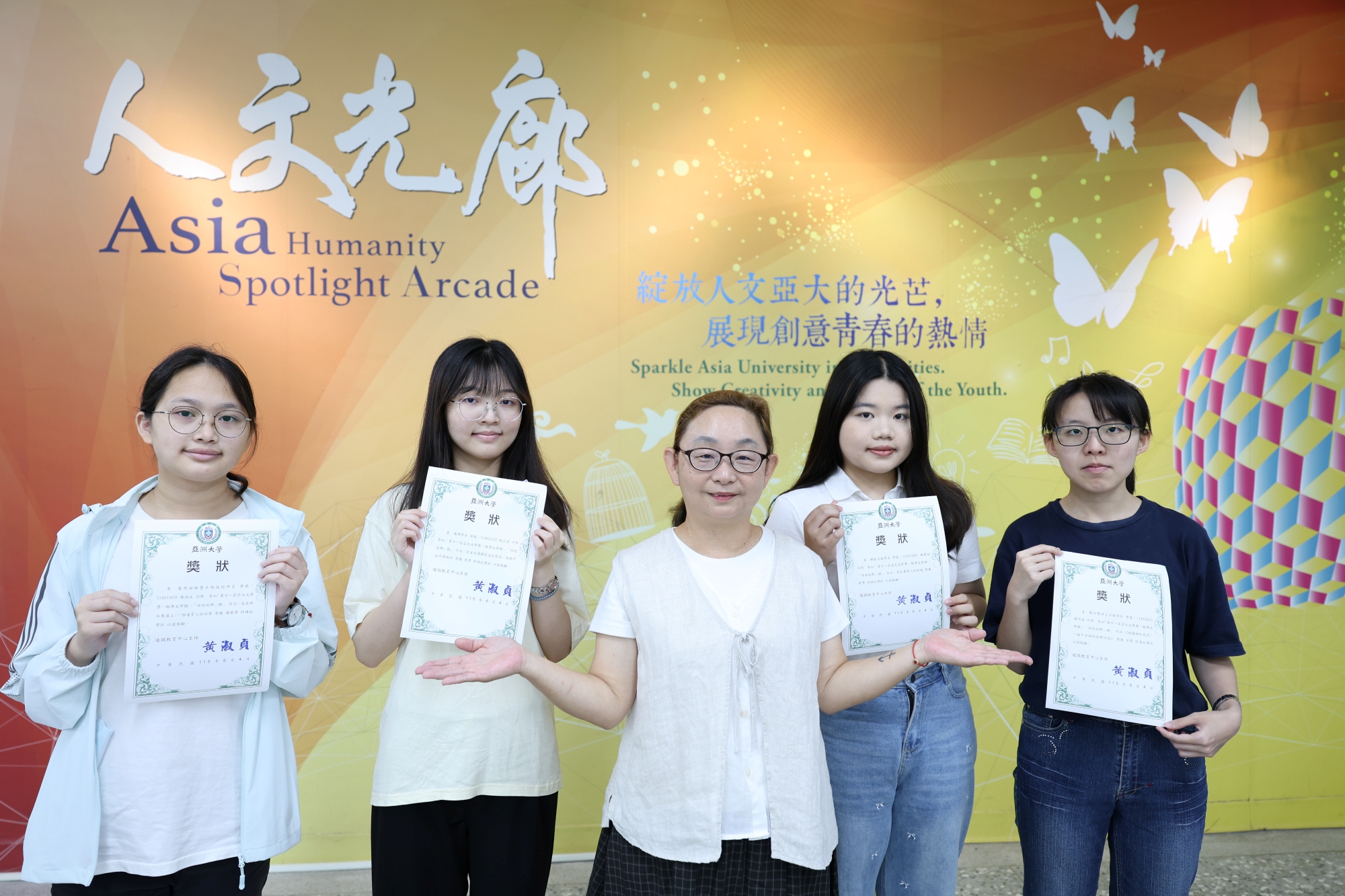 Award-winning students of the "Tales of My Homeland" reportage category join Associate Professor Chao-Yin Lai (center) of the Center for General Education for a commemorative photo.
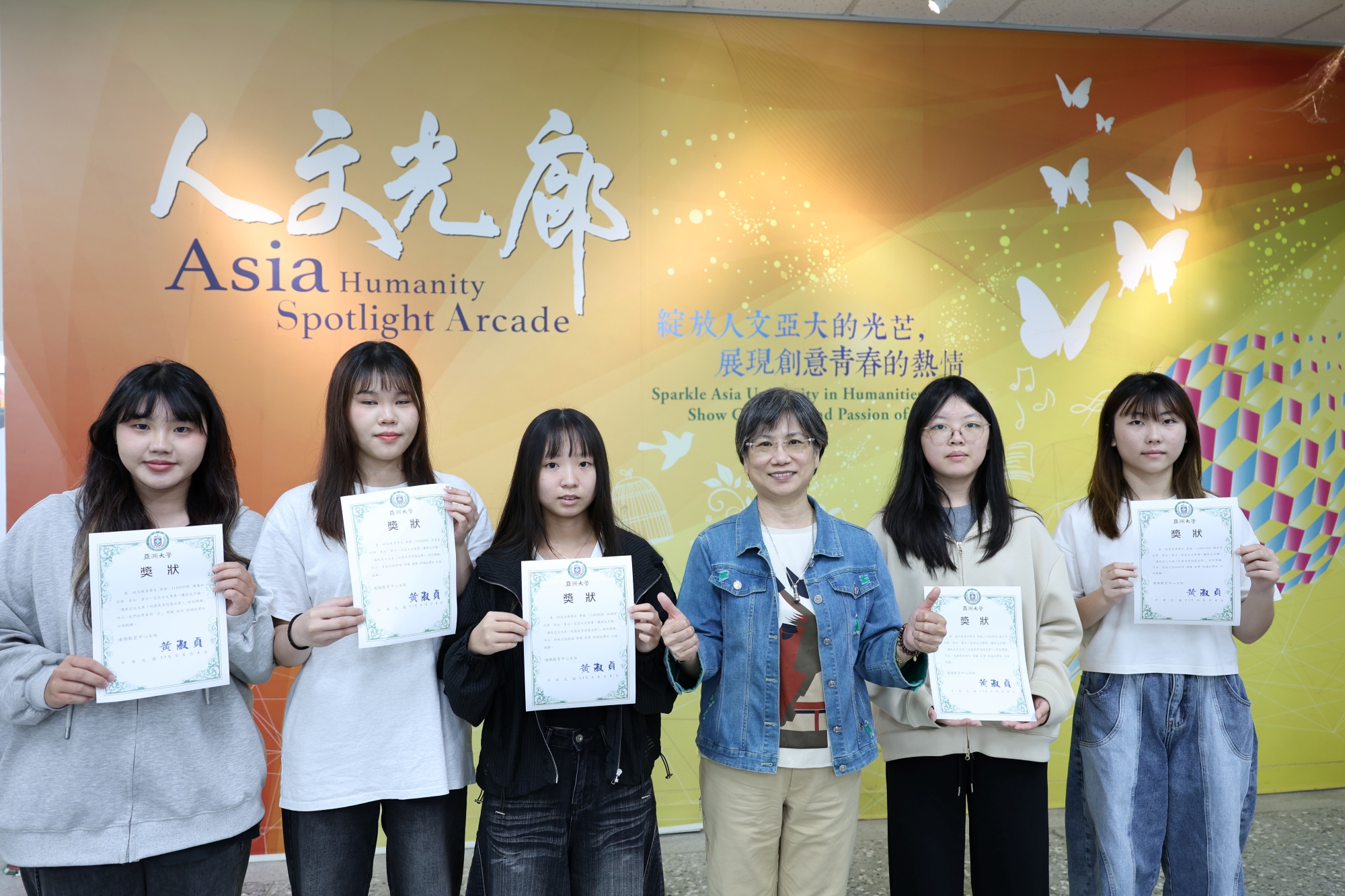 Award-winning students of the "Meeting the Beauty of Asia University" photo essay category join Assistant Professor Li-Chieh Wu (center) of the Center for General Education for a commemorative photo.
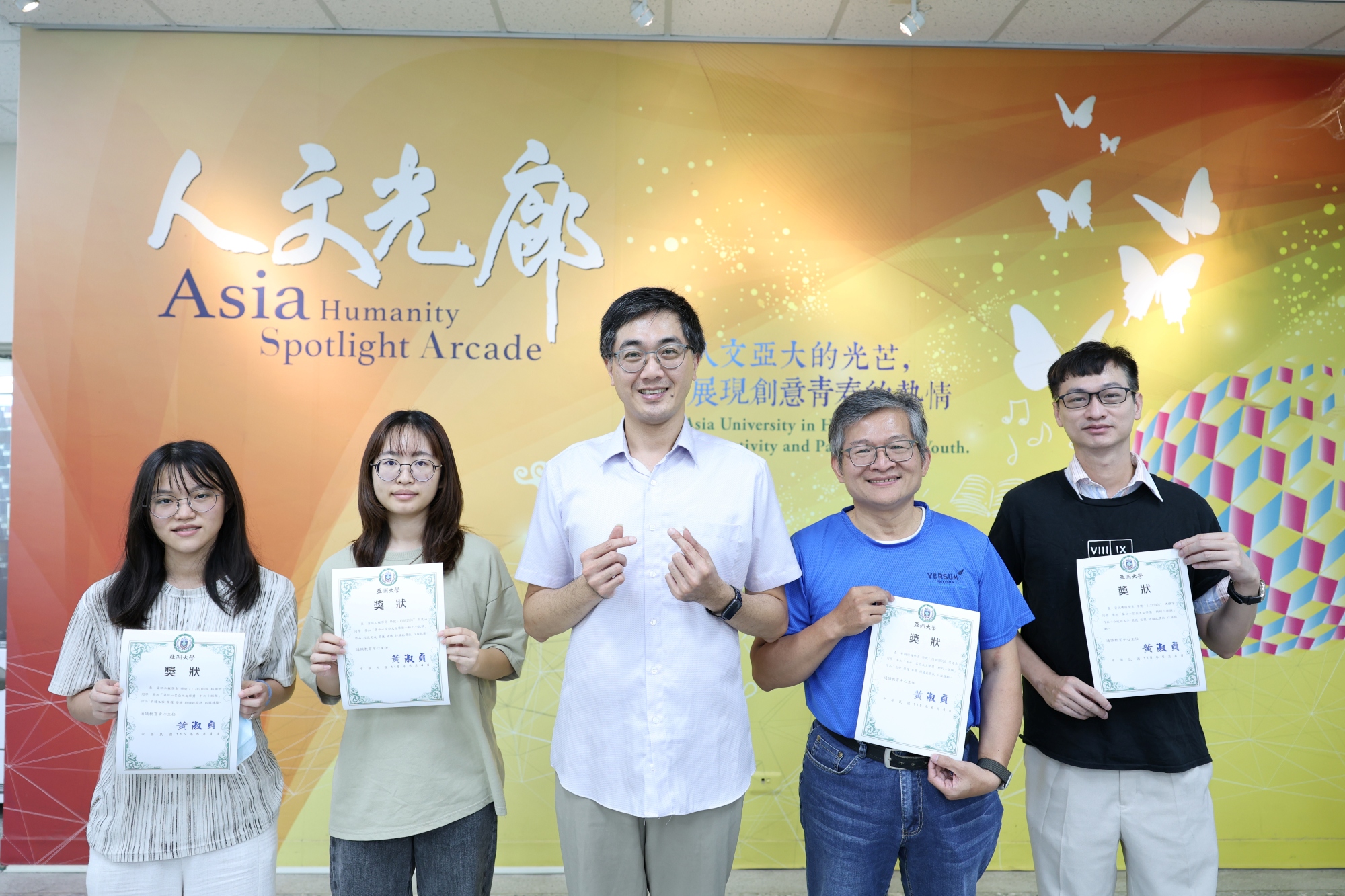 Award-winning students of the science fiction category join Assistant Professor Chun-Chih Chen (center) of the Center for General Education for a commemorative photo.
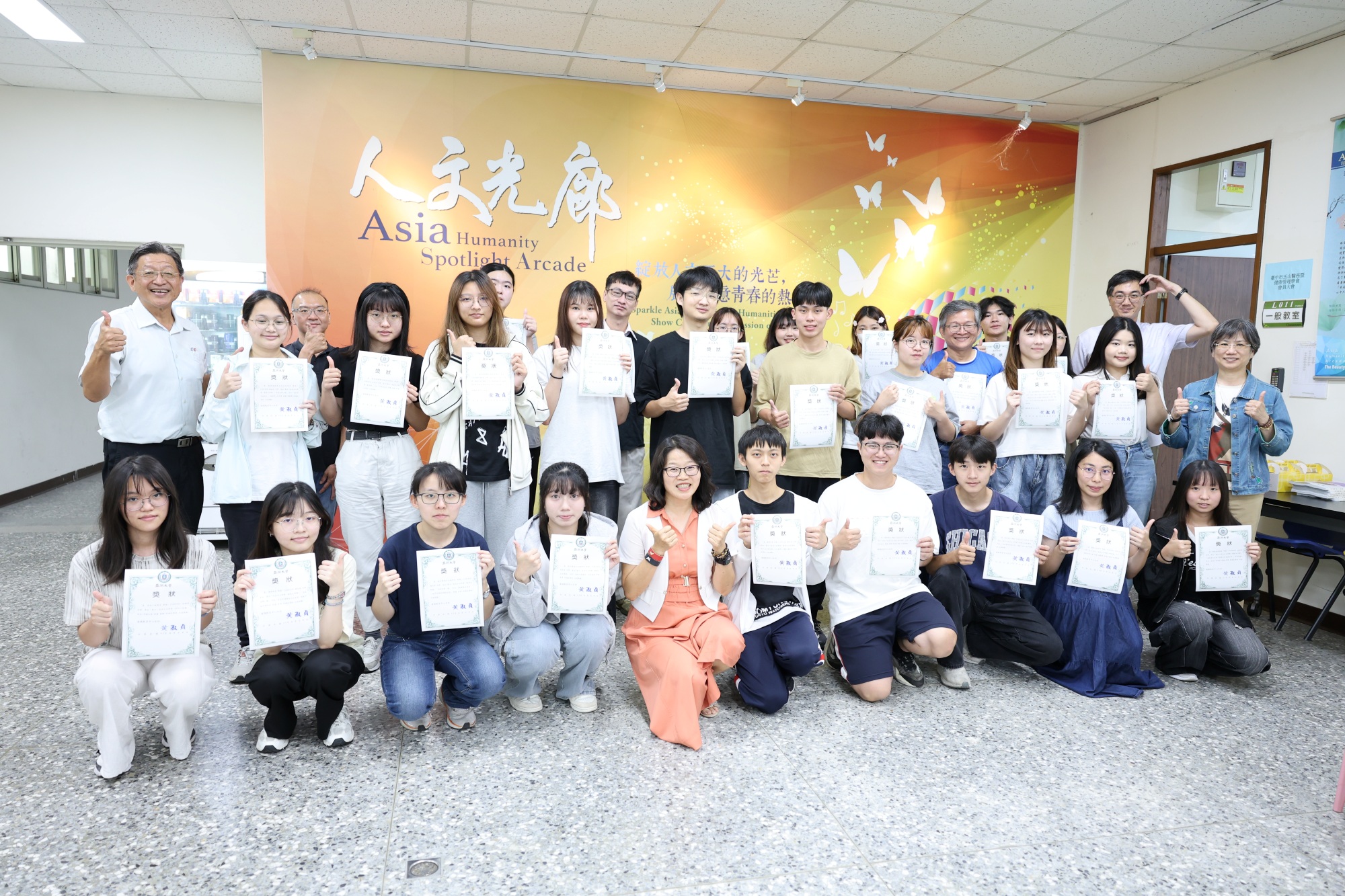 Award-winning students of the 21st Asia University Literature Award join Director Huang Shu-chen (center) of the Center for General Education for a group photo.
