



Ministry of Education’s 10-Billion 'Overseas Dream Fund' Unveils Flagship Initiative: A 9-Week Immersive Program to Cultivate Interdisciplinary Tech Talent
Another major milestone has been reached for Taiwanese youth entering the world's top scientific research arenas. Supported by the Ministry of Education’s "Taiwan Global Pathfinder Initiative" (also known as the 10-Billion Overseas Dream Fund) and hosted by Asia University, the "2026 UCLA Biomedical Engineering × Quantum Science Elite Program"—an academic collaboration with the Center for Quantum Science and Engineering (CQSE) at the University of California, Los Angeles—officially kicked off on July 7 (U.S. West Coast time) at the UCLA Samueli School of Engineering. This intensive nine-week overseas program focuses on cutting-edge fields including quantum science, biomedical engineering, artificial intelligence, semiconductors, and digital health. It guides Taiwanese students into world-class university laboratories, cultivating a new generation of tech leaders equipped with a global perspective and interdisciplinary integration capabilities.
The inaugural keynote lecture was delivered by Dr. KS John Huang, titled "From Everyday Science & Technology to the Quantum World: Kissing Photons, Electrons and AI/Biology." Dr. Huang guided students from everyday technological phenomena into a deep understanding of the vital connections between quantum science, AI, and biomedicine. Bringing a wealth of experience spanning academic research, industrial R&D, and entrepreneurship, Dr. Huang has previously served as an IBM researcher, Principal Engineer at Rockwell, and Senior Manager & Technical Lead at Cisco, as well as CEO, CTO, and Chief Scientist for multiple high-tech startups. Adding to the inspirational weight of the opening day, Dr. Huang was a student of Richard Feynman, the pioneer of quantum electrodynamics and winner of the 1965 Nobel Prize in Physics.
This program converges heavyweight academic and research resources from both Taiwan and the United States. The overarching vision for the curriculum was mapped out by Dr. Kang L. Wang, a Distinguished Professor at UCLA and Academician of Academia Sinica, connecting students to UCLA's world-class faculty and laboratory networks. Dr. K.C. Huang, Chair Professor at Asia University, serves as the Principal Investigator, overseeing transnational resources and the overall strategic direction. Representing the Asia University and China Medical University (AU-CMU) Alliance, Professor Hung-Rong Yen, Dean of the College of Chinese Medicine at China Medical University, is accompanying the delegation full-time to support students in their academic transitions, cultural adaptation, and overseas life. Furthermore, the program integrates resources from the UCLA Samueli School of Engineering, David Geffen School of Medicine, Joe and C. Wen School of Nursing, and the Taiwanese American Industrial Technology Association (TAITA-EAST) to build a truly cross-institutional, cross-disciplinary, and cross-industrial learning platform.
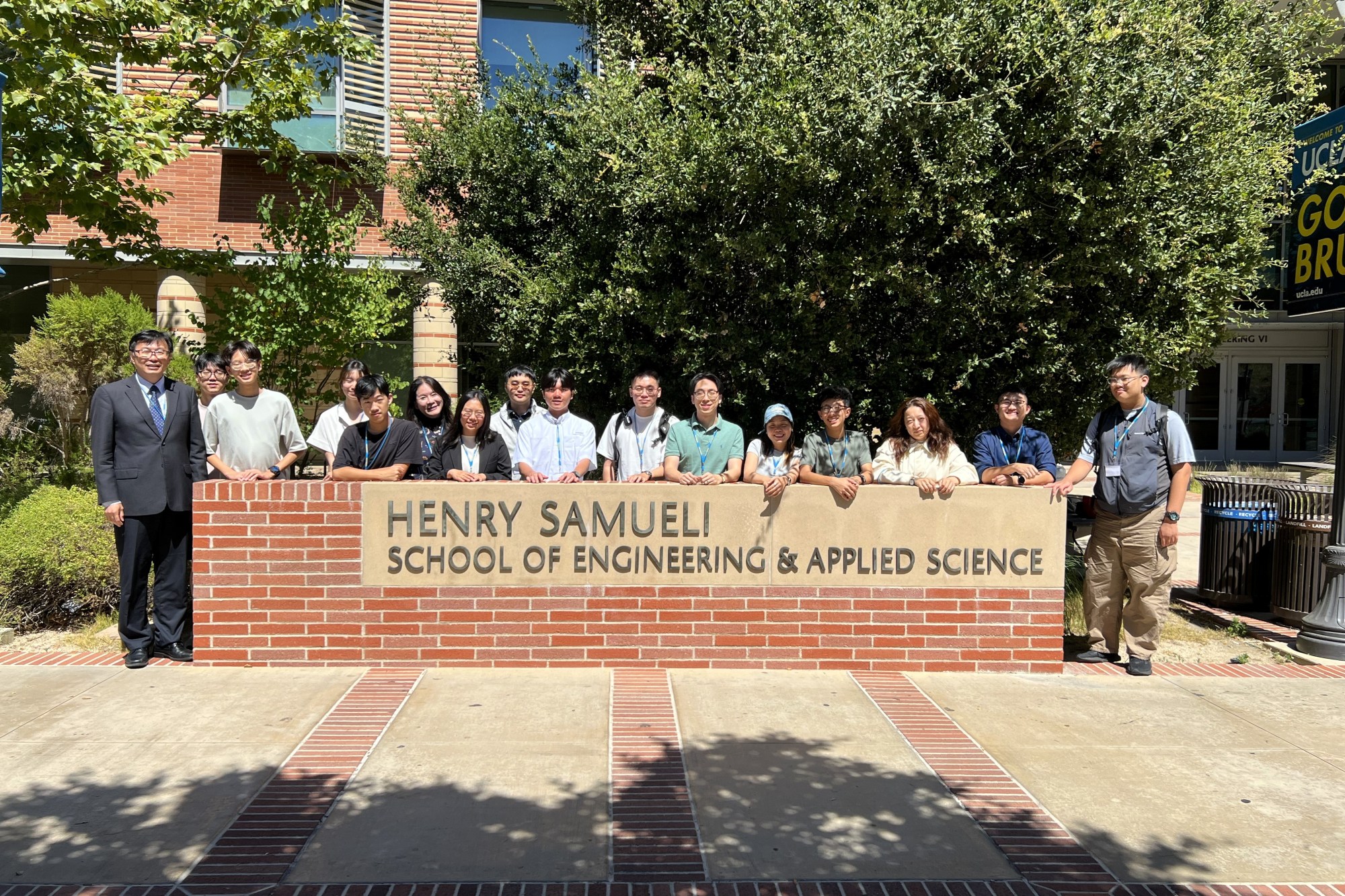 Participants of Asia University's "UCLA Biomedical Engineering × Quantum Science Elite Program" pose for a group
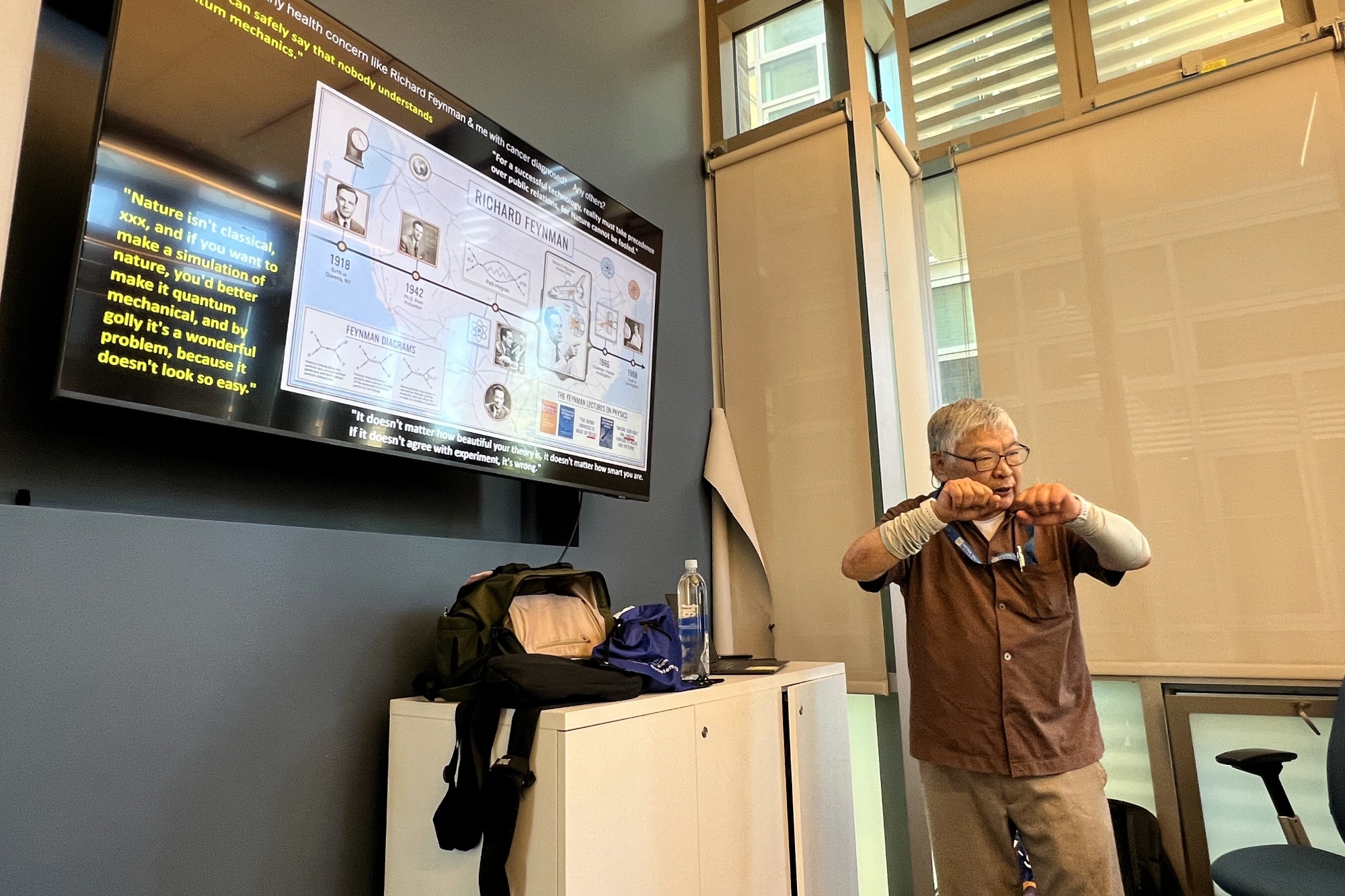 Day 1 keynote speaker Dr. KS John Huang lecturing on the fundamentals of quantum science.
The nine-week program features an elite roster of instructors. In addition to faculty from UCLA, the program has convened professors from other top-tier institutions—including the California Institute of Technology (Caltech), the University of Southern California (USC), the University of California, San Diego (UCSD), and Stanford University—alongside industry experts from fields such as quantum computing, semiconductors, and healthcare. The curriculum covers a comprehensive range of cutting-edge topics: quantum science, artificial intelligence, data analytics, semiconductors and materials, neuroscience, biomedical engineering, digital health, and integrative medicine. Through this intensive training, participants are empowered to master the pulse of frontline technological advancements while critically examining the intersections of future healthcare, industrial innovation, and societal needs.
To prevent the overseas study experience from becoming a passive, one-way lecture series, the program features a specially designed, high-intensity learning model: "Input in the morning, Output in the afternoon." After receiving advanced training in the morning, participants engage in afternoon teach-back sessions moderated by Professor Iris Yang. Working in groups, students rephrase what they learned that day in their own words, propose real-world applications, and raise extended questions. Leveraging generative AI tools for troubleshooting, team discussions, and project planning, they progressively build their daily insights into structured research directions. By the conclusion of the nine-week program, participants will complete both individual and team projects, presenting their findings at a final symposium to showcase their cross-disciplinary integration and international communication skills.
Dr. K.C. Huang, Chair Professor and Program Director at Asia University, pointed out that the participating students come from diverse backgrounds with distinct professional foundations, learning experiences, and future goals. Consequently, the program does not expect every student to arrive at the same answer, nor does it measure success by a single standard. Instead, the true value lies in whether students can discover their own direction in an international learning environment, propose forward-looking and challenging questions, and map out sustainable pathways for their future learning, research, employment, or entrepreneurship. Dr. Huang emphasized that he hopes what students bring back to Taiwan is not just existing knowledge, but a set of questions worthy of long-term exploration, a vision for future technology, and a guiding light to illuminate their ongoing journeys. The program has also received robust support from the Education Division of the Taipei Economic and Cultural Office (TECO) in Los Angeles and the local expatriate community, demonstrating the collective power of the government, academia, and overseas Taiwanese communities in supporting young people as they step onto the global stage.
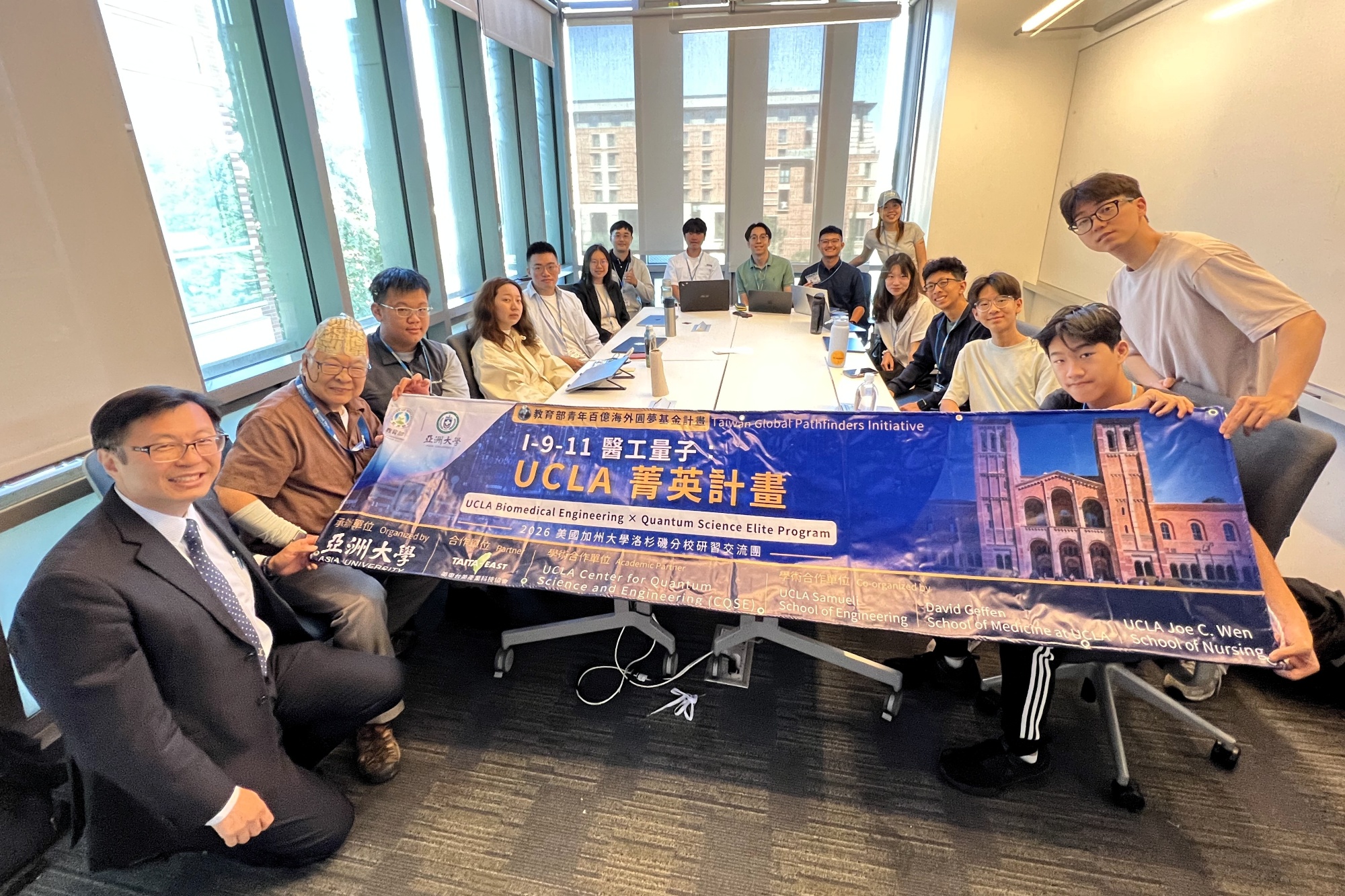 Day 1 keynote speaker Dr. KS John Huang with students, mentors, and volunteers.
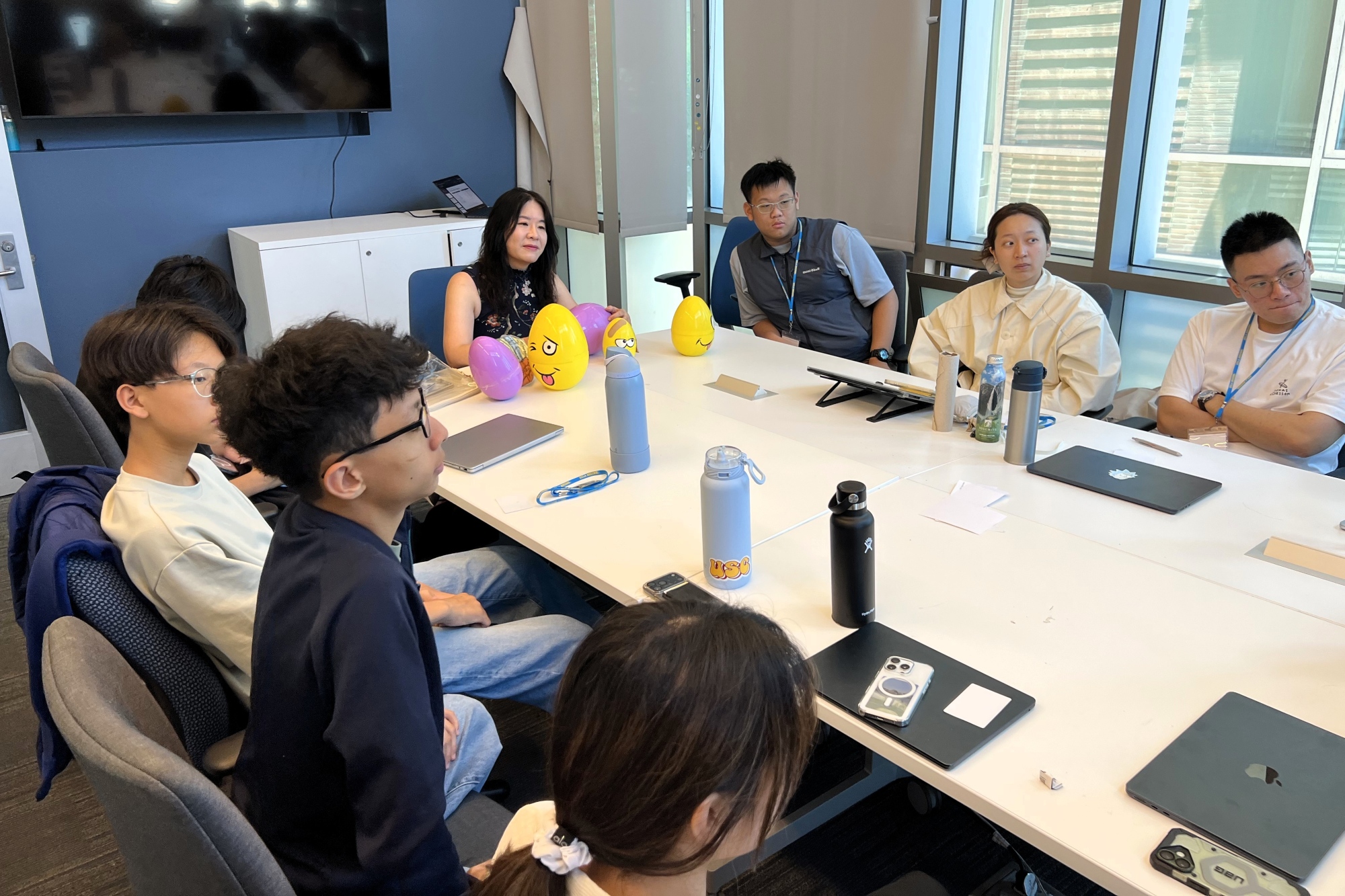 Professor Iris Yang leading students through an interactive teach-back and discussion session on Day 1.
