



PMC Donates Advanced “Ultrasonic Spray Coating System,” Expanding Research Capacity and Impact
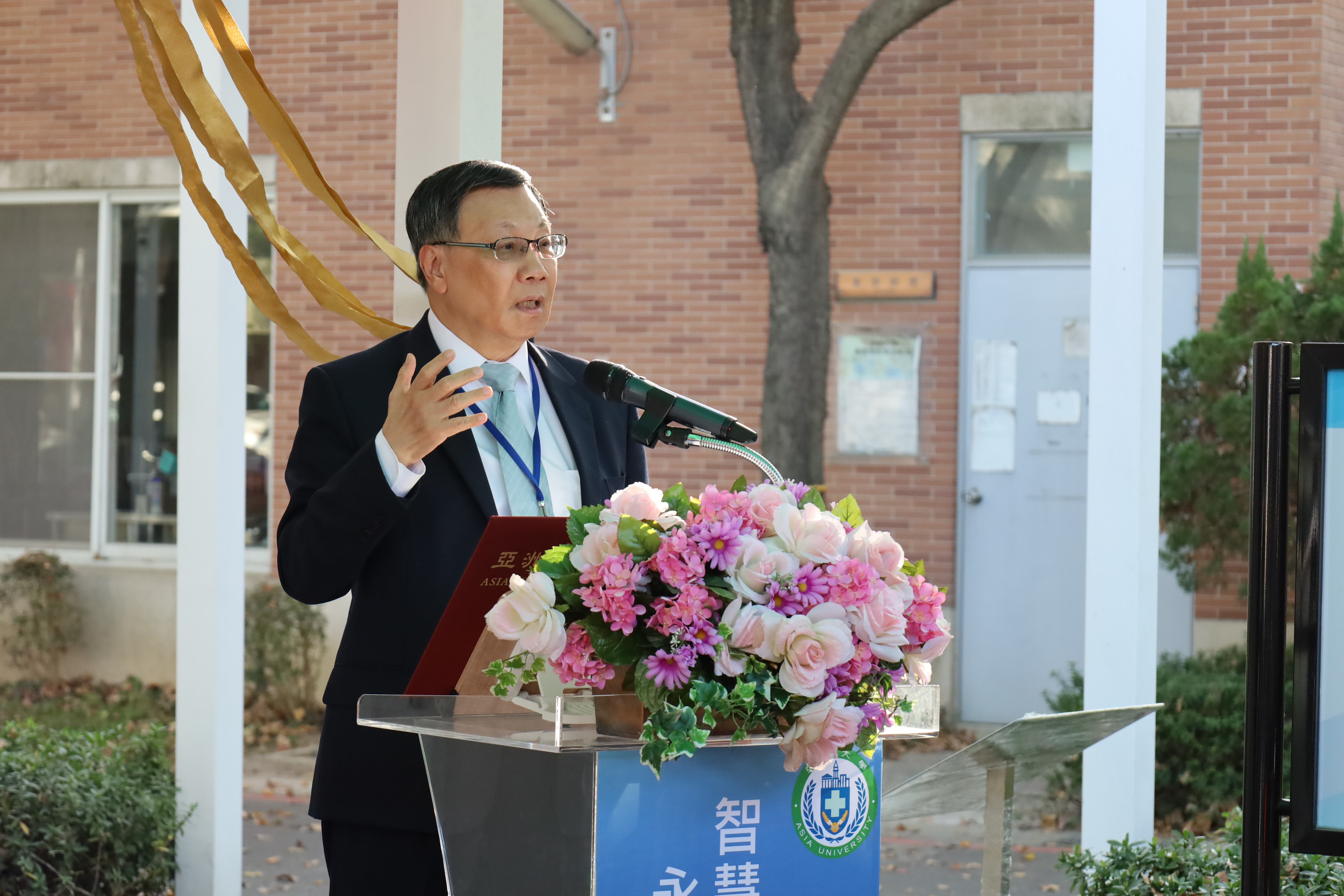 Asia University President Jeffrey J.P. Tsai stated that the unveiling of the Asia University Smart Semiconductor Center will help cultivate more semiconductor talent for Taiwan.
Asia University’s Smart Semiconductor Design and Sustainable Manufacturing Research Center was officially inaugurated on the 17th. On the same occasion, Asia University signed memoranda of understanding (MOUs) for academic and research collaboration with Lingxun Precision Industry Co., Ltd. and the Precision Machinery Research & Development Center (PMC), underscoring a strong commitment to industry–academia collaboration in talent cultivation and technological innovation. PMC also donated an advanced ultrasonic spray coating system to Asia University, which will be used to accelerate experimental validation, process development, and cross-disciplinary technology integration, further enhancing the university’s research capacity.
The inauguration ceremony featured the signing of cooperation agreements by Asia University President Jeffrey J.P. Tsai, Lingxun Precision General Manager Tsai Tse-Sung, and PMC President Lee Chien-Hsun. The partnerships aim to leverage the professional expertise of Asia University and its industry partners to establish long-term collaborative relationships, jointly advancing semiconductor technology research and industry-oriented talent development. Distinguished guests attending as witnesses included National Cheng Kung University Chair Professor Su Yen-Kun and Chen Chien-Lun, General Manager of Lam Research, one of the world’s top three semiconductor equipment manufacturers.
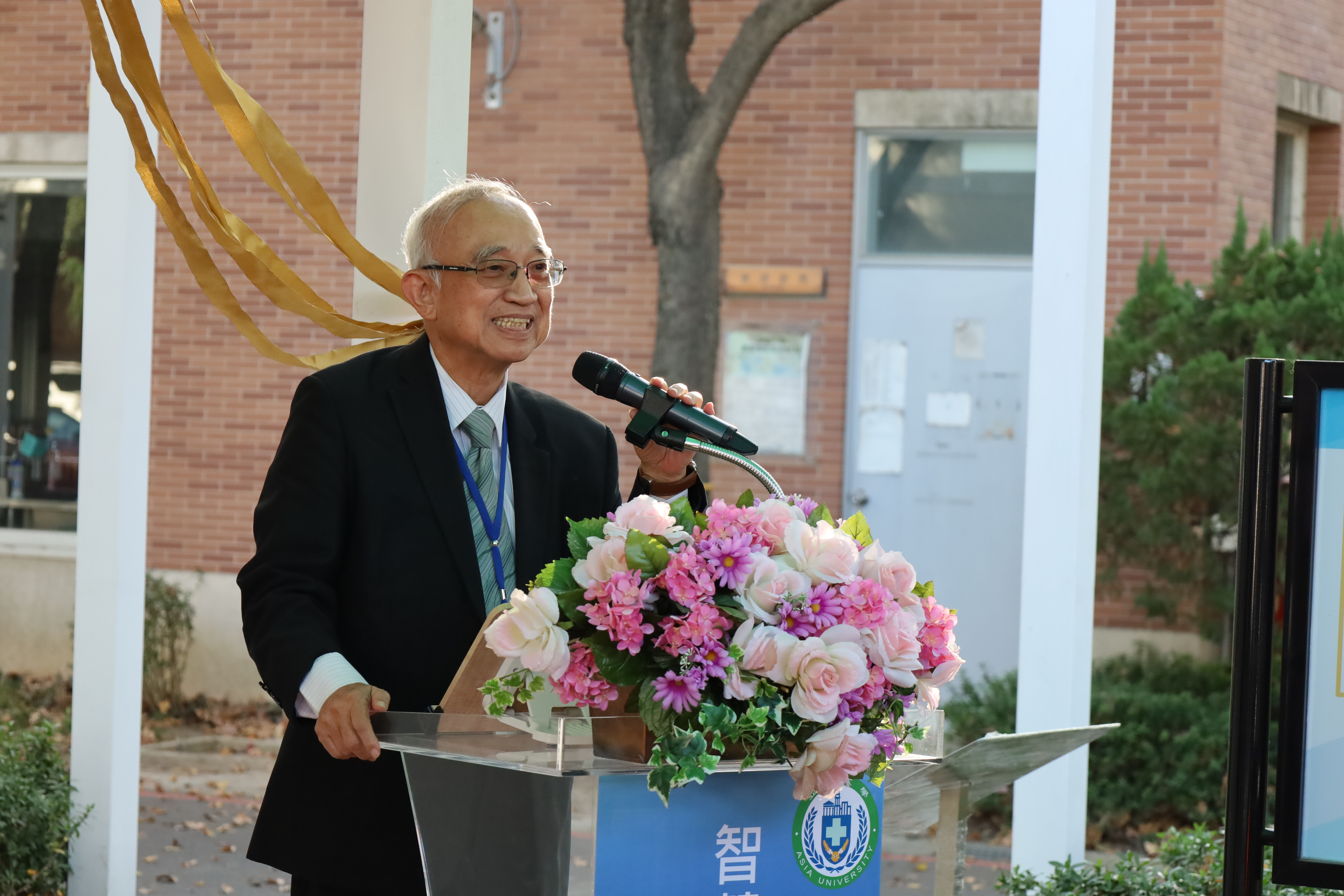 Su Yen-Kun, Chair Professor at National Cheng Kung University, expressed strong support for the establishment of Asia University’s semiconductor research center and said he looks forward to further collaboration in the future.
President Jeffrey J.P. Tsai stated that in response to rapid technological advancement and industrial transformation, Asia University (AU) has established three major university-level research centers: the Precision Health Research Center, which integrates medical big data; the AI and Quantum Research Center, combining artificial intelligence and quantum technologies; and the newly launched Center for Smart Semiconductor Design and Sustainable Manufacturing. AU is also committed to advancing hands-on AI education. This year, the University offered NVIDIA Deep Learning Institute (DLI) practical courses, through which faculty and students earned 39 certifications, bringing the cumulative total to 139—ranking first among universities nationwide. In addition, AU’s Cloud Innovation Academy, established in collaboration with Amazon Web Services (AWS), has enabled 133 participants to obtain AWS certifications.
Speaking on the vision of the semiconductor center, President Tsai cited data from the “2025 Semiconductor Industry Talent Report,” noting that the semiconductor sector faces a shortage of approximately 34,000 professionals per month, including nearly 10,000 positions in R&D and manufacturing. As TSMC simultaneously expands capacity across four major sites in Taiwan and CoWoS capacity remains in short supply, the company plans to recruit 5,000 new employees. ASE Technology Holding’s expansion in central Taiwan has also intensified demand for semiconductor talent. In the past, AU launched a Semiconductor Industry–Academia Program that has trained hundreds of engineers now serving at global leaders such as Apple and TSMC with outstanding performance. Beginning in the 115th academic year, AU will also establish a bachelor’s degree program in semiconductors, enrolling 52 students in its first cohort. Through collaboration among government, industry, academia, and research institutions, AU aims to foster innovation, sustain Taiwan’s semiconductor advantages, and fulfill its social responsibility as a university.
Chair Professor Su Yen-Kun of National Cheng Kung University, who has long focused on semiconductor manufacturing processes, smart manufacturing, and sustainable technologies, brings extensive experience in both academic research and industry practice. He emphasized Taiwan’s critical role in the global semiconductor industry and expressed his hope to cultivate more internationally competitive semiconductor professionals, while also looking forward to further collaboration with Asia University.
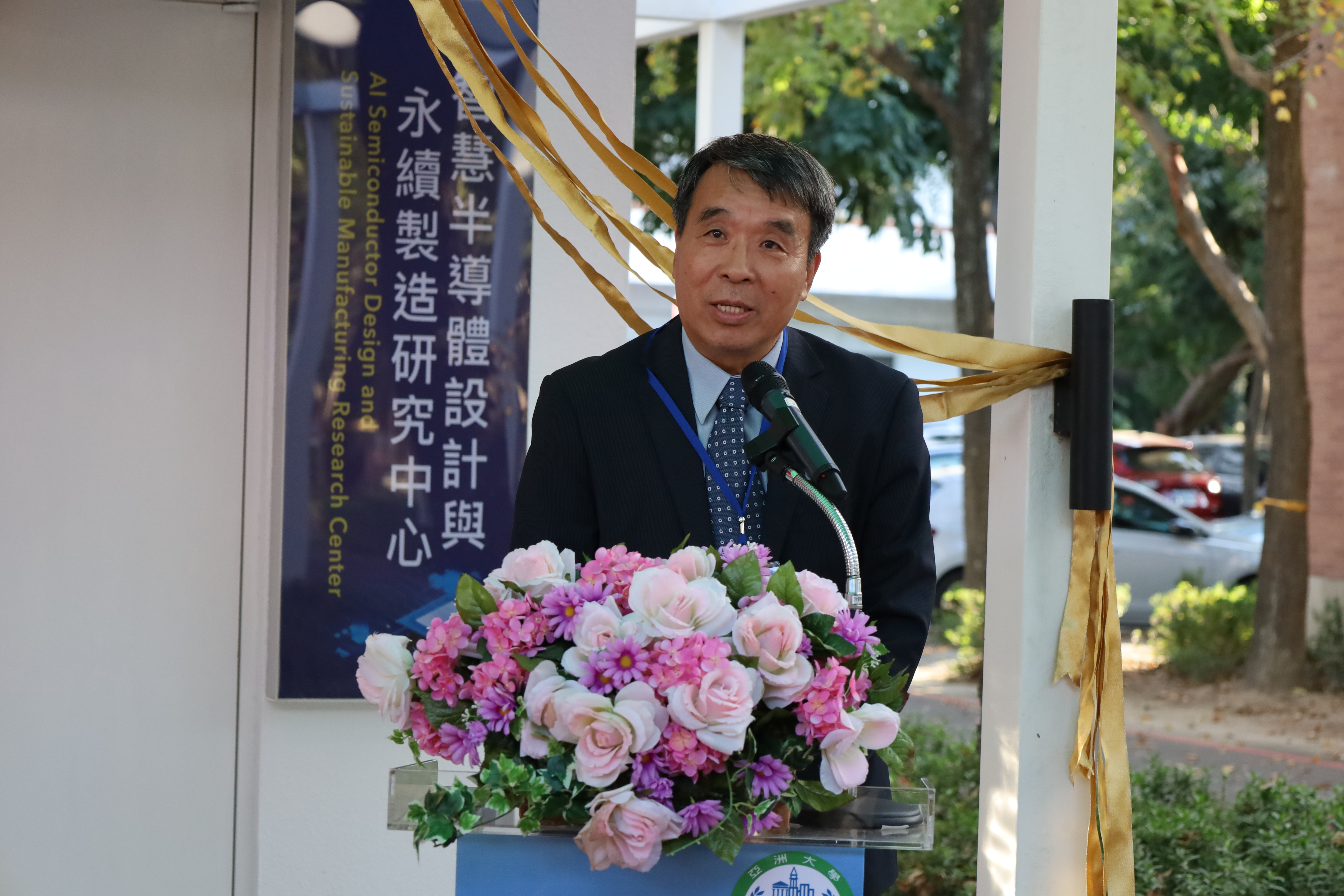 Tsai Tse-Sung, General Manager of LingSen Precision Industries, remarked that Asia University has “risen rapidly among universities,” demonstrating remarkable strength and impressive capabilities.
One of the signing partners in this collaboration, LingSen Precision Industries, is headquartered in Tanzih District, Taichung, and serves as a core company within the central Taiwan semiconductor cluster. Originally established as a joint venture between Japan’s Mitsubishi Electric and Taisan Electronics, LingSen Precision was Taiwan’s first IC packaging and testing company. Its Taichung site comprises five production buildings, employs more than 3,000 staff worldwide, and is a major provider of employment opportunities in central Taiwan. The company specializes in MEMS (micro-electro-mechanical systems), optical components, and power management IC packaging and testing, and is recognized as a domestic leader in MEMS packaging.
LingSen Precision General Manager Tsai Tse-Sung said that from the moment he visited Asia University, he felt a strong sense of vitality. “From the students’ expressions to the campus environment, you can really feel it—studying at Asia University is a pleasure,” he said. He noted that Asia University has “risen rapidly,” managing to grow against the odds of declining birth rates while actively expanding industry-aligned programs, and expressed strong expectations for future collaboration.
Another partner, the Precision Machinery Research & Development Center (PMC), operates under the Department of Industrial Technology of Taiwan’s Ministry of Economic Affairs and serves as a key hub linking the central Taiwan machinery cluster with academic and research institutions. PMC currently focuses on three major priorities: AI value-added applications, such as defect detection on production lines; standards testing and certification to support equipment exports; and intelligent automation solutions to address labor shortages. Its collaboration with Asia University’s Semiconductor Center will focus on promoting localization of semiconductor equipment, helping domestic companies enter the back-end packaging and testing equipment market, as well as developing energy-saving technologies and digital carbon inventory tools to advance sustainable and green manufacturing.
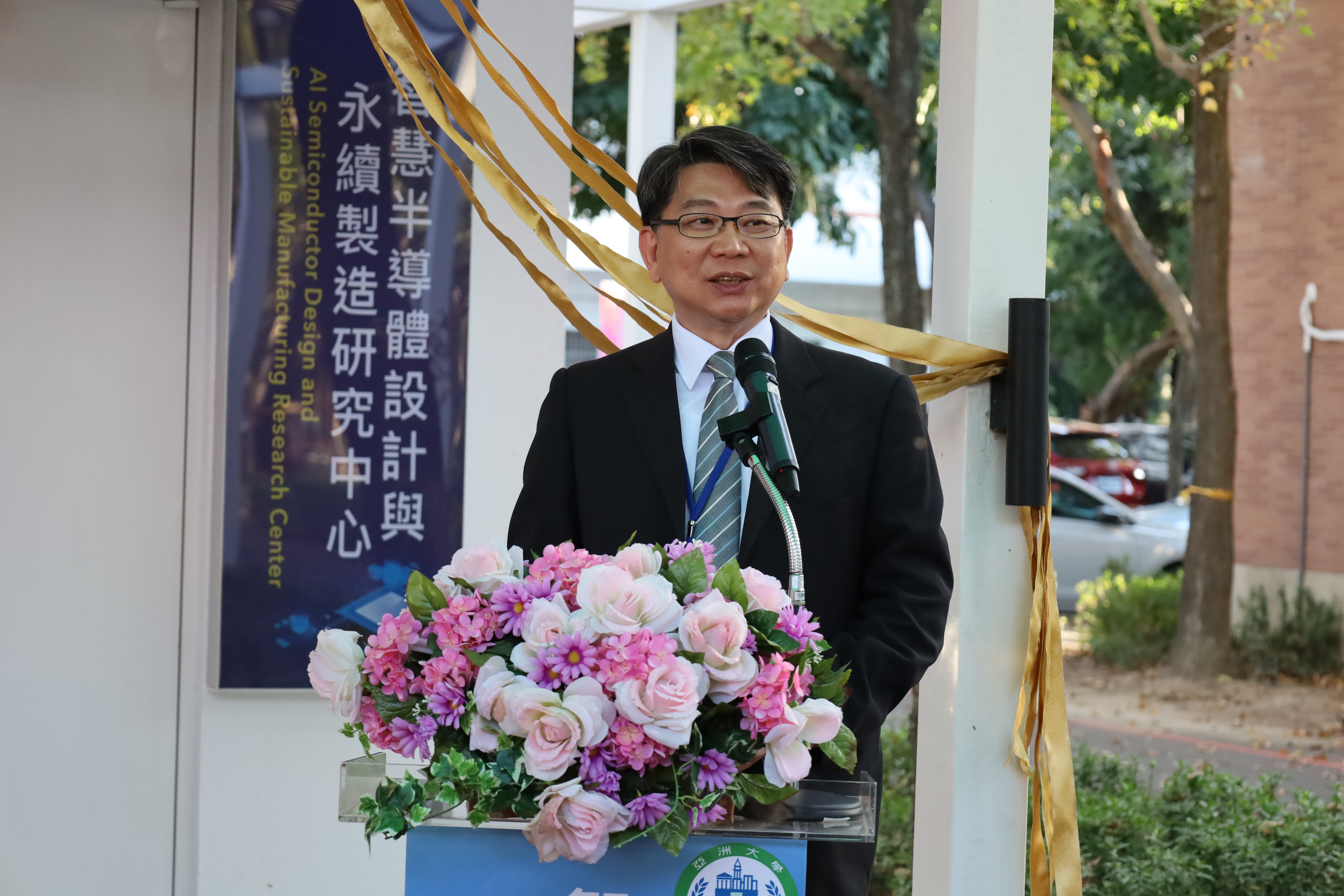 Precision Machinery Research & Development Center (PMC) President and CEO Lee Chien-Hsun stated that he looks forward to deepening cooperation with Asia University, particularly in areas such as the cultivation of talent in semiconductor process technologies and related fields.
President and CEO Lee Chien-Hsun of the Precision Machinery Research & Development Center (PMC) noted that as the semiconductor industry continues to evolve rapidly, the independent development of advanced processes and critical equipment, together with the systematic cultivation of high-level technical talent, has become a key driver of industrial upgrading. With long-term support from the Department of Industrial Technology of the Ministry of Economic Affairs for scientific research innovation and strategic technologies, PMC has accumulated strong R&D capabilities in core process equipment such as ultrasonic spray coating through national technology projects. These成果 are now being extended through academia–industry collaboration, including the donation of a self-developed “Ultrasonic Spray Coating System” to Asia University.
The system can be widely applied in key processes for semiconductors and advanced packaging, optoelectronic components, and functional thin films. It provides universities and research institutes with access to industry-relevant advanced equipment platforms, accelerating experimental validation, process development, and cross-disciplinary technology integration, and further expanding the spillover benefits of research capacity.
Lee Chien-Hsun emphasized that PMC will continue to deepen collaboration with Asia University in areas such as semiconductor process technologies, independent development of critical equipment, and the cultivation of industry-ready talent. Through a two-way cycle that brings research成果 into the campus and feeds talent back into industry, PMC aims to connect government research resources, nonprofit R&D platforms, and higher education systems to jointly advance semiconductor technology upgrading and strengthen industrial competitiveness.
According to the memorandum of understanding, Asia University will engage in comprehensive cooperation with PMC and Lingsen Precision Industries, focusing on: research exchange on semiconductor automated production equipment and smart manufacturing technologies; joint research on automation control systems and related equipment; development and validation of ultrasonic spray coating technologies for semiconductor processes; talent cultivation through student visits, training programs, and internships; joint organization of seminars and technical lectures; and collaborative applications for and execution of government-funded research projects or industry–academia cooperation initiatives.
Huang Chun-Chieh, Vice President of Asia University and Director of the Intelligent Semiconductor Research Center, stated that the unveiling of the Semiconductor Research Center marks an important milestone in Asia University’s advancement into high-tech fields. The simultaneous launch of the Semiconductor Bachelor’s Degree Program is positioned to align closely with industry needs and cultivate in-demand talent. The university has planned comprehensive facilities, including a Semiconductor Sustainability Plaza, Semiconductor Living Lab, Semiconductor Laboratories, Semiconductor Packaging and Testing Classrooms, and an AMD Logic and Computing Laboratory. A total of 12 faculty members are assigned across upstream, midstream, and downstream areas of the semiconductor curriculum, with expertise covering semiconductor processes, device physics, packaging and testing, materials analysis, AI, and smart manufacturing. This structure supports cross-disciplinary learning and develops students’ system integration and problem-solving capabilities, nurturing semiconductor professionals with collaboration skills, innovation capacity, and an international outlook.
Vice President Huang stressed that the establishment of the Semiconductor Research Center would not have been possible without strong industry support. He expressed particular gratitude to PMC for the generous donation of the Ultrasonic Spray Coating System, which will become a key research tool for advanced coating technologies at Asia University. Close collaboration with Lingsen Precision Industries is also underway, with plans to introduce AI-enabled smart manufacturing technologies to address automation and defect detection challenges on production lines, while looking forward to expanded partnerships with additional industry collaborators in the future.
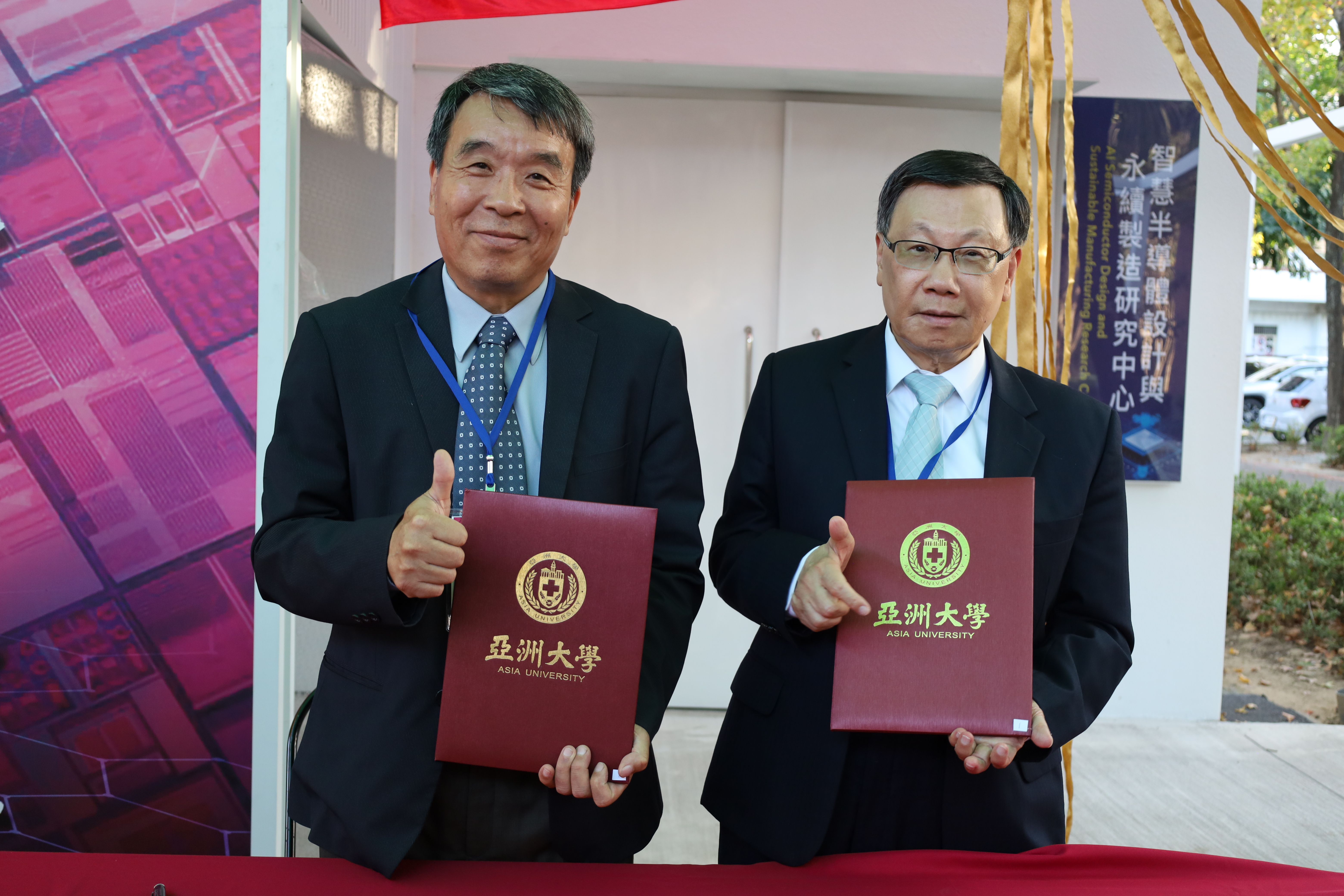
memorandum of understanding.
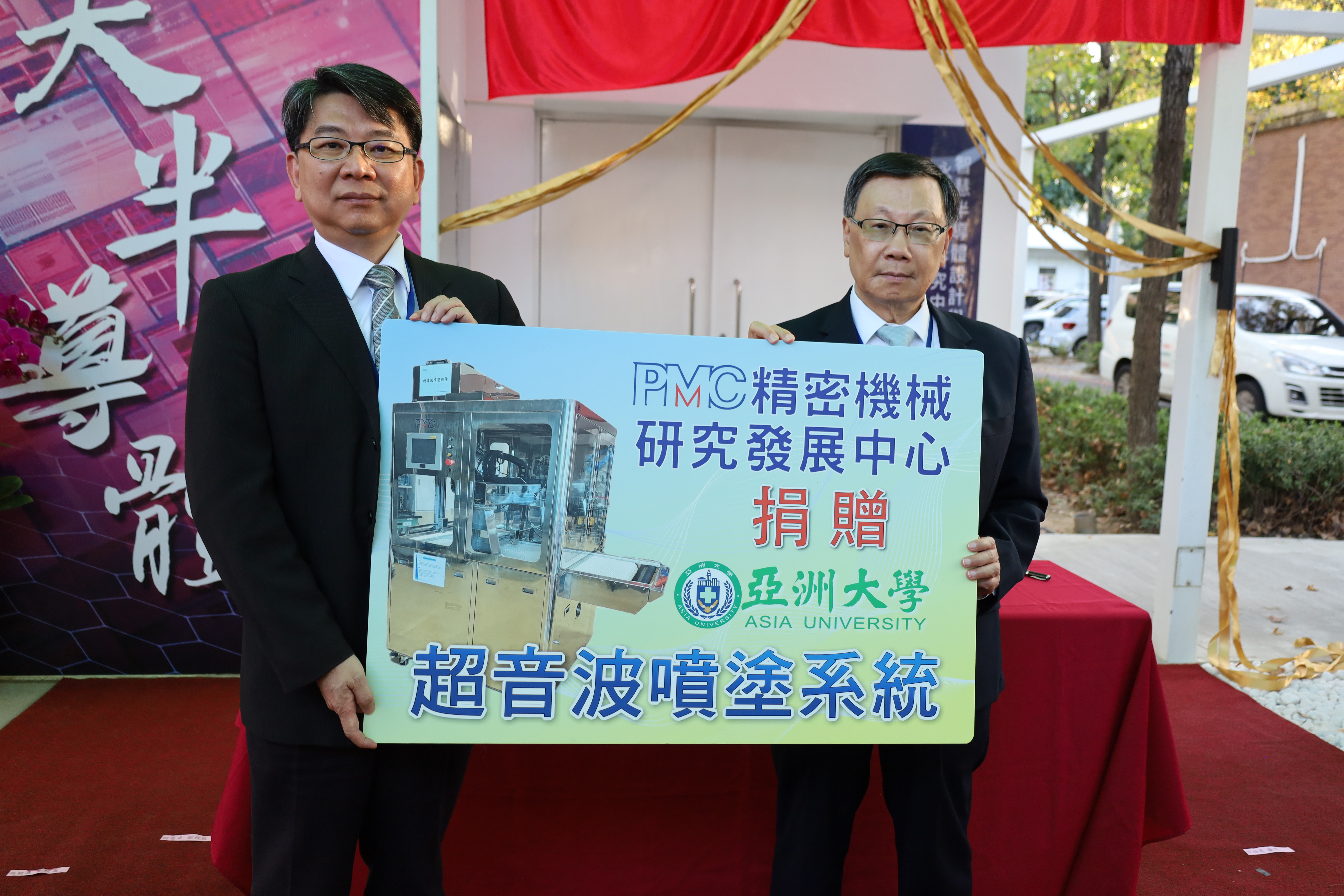
Jeffrey J.P. Tsai (right) accepting on behalf of the university.
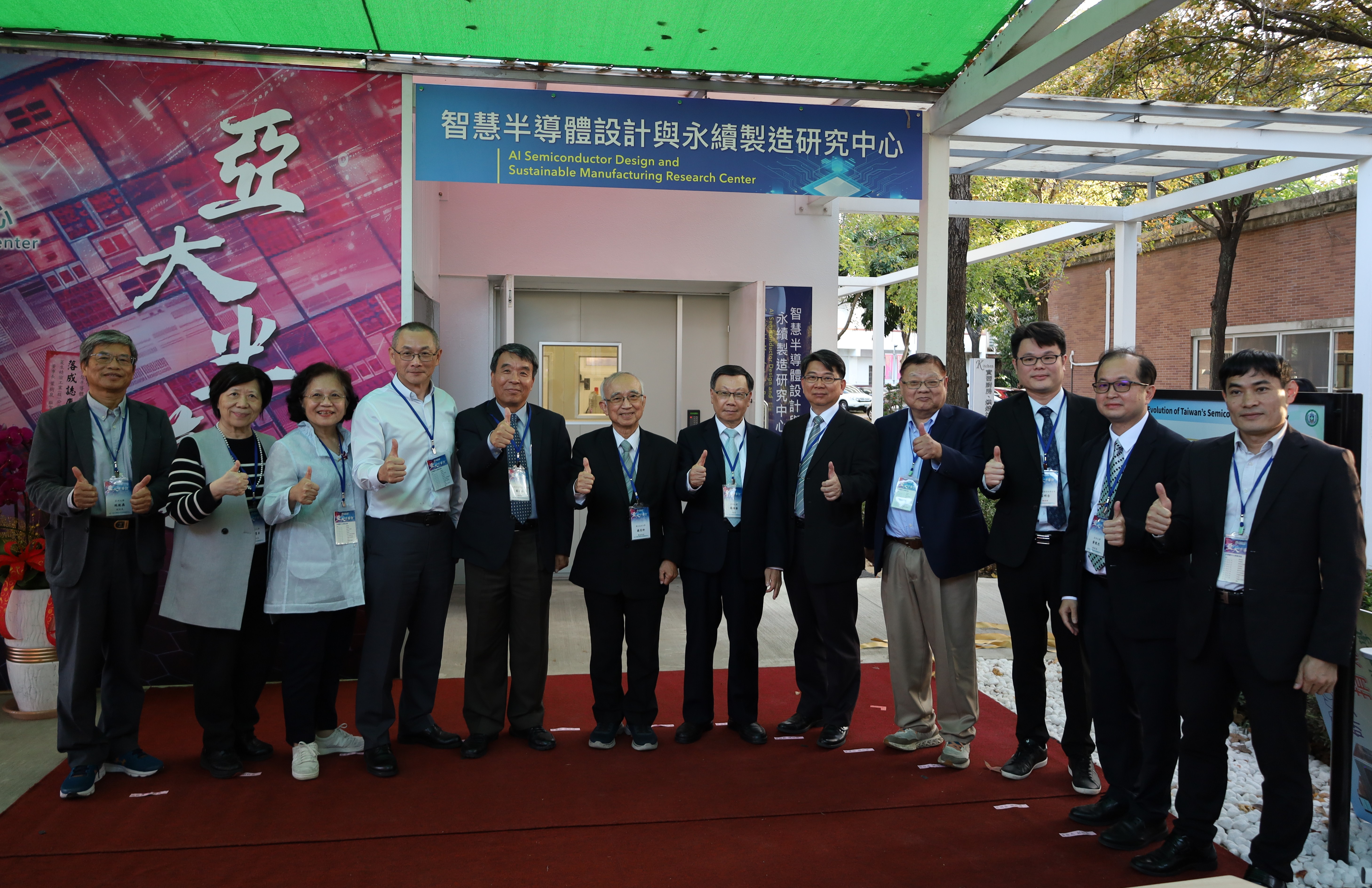
Jeffrey J.P. Tsai (right 6), Professor Su Yan-Kun from National Cheng Kung University (right 7),and otherrepresentatives
posing for a group photo.
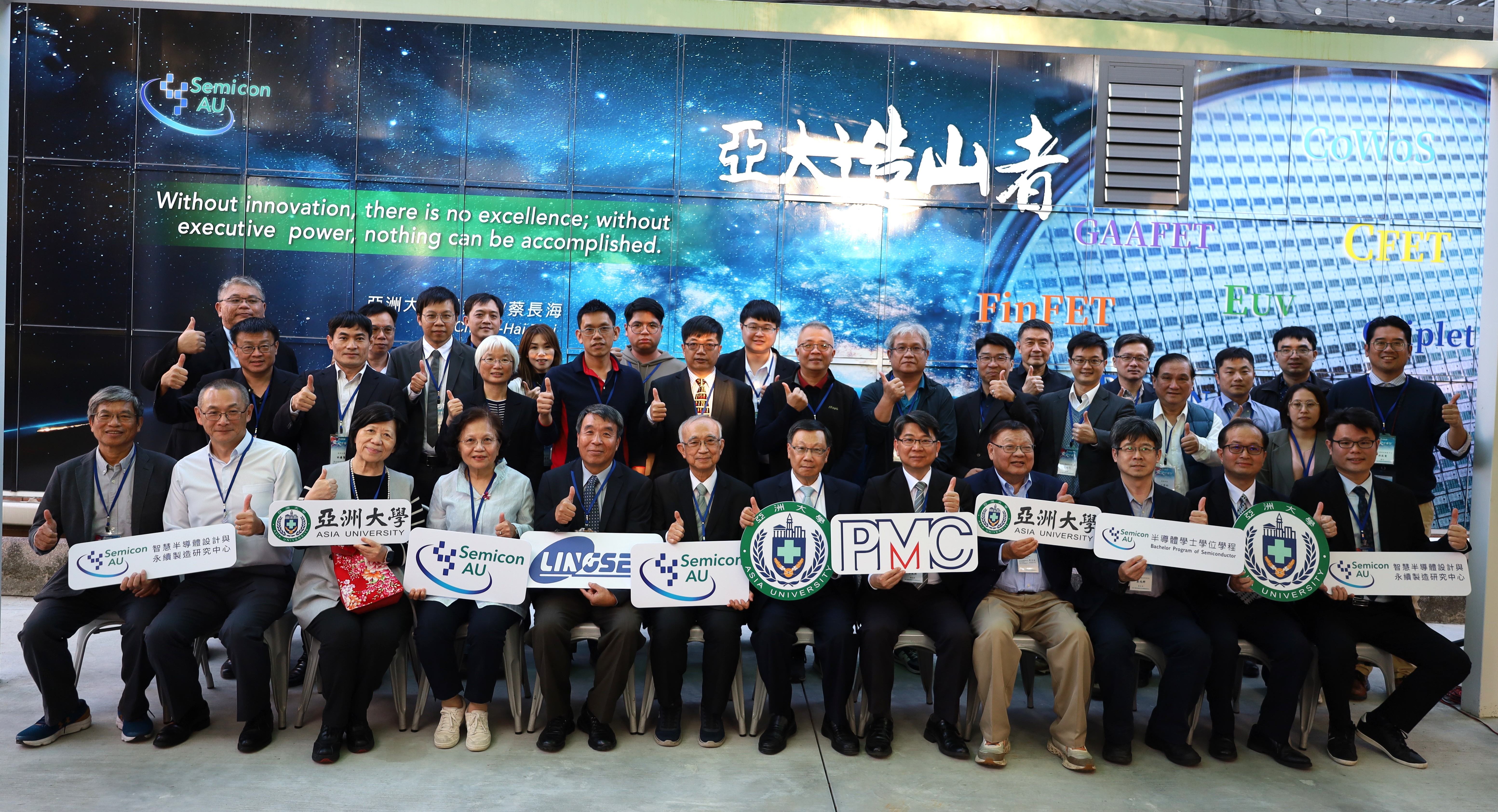
Manager Tsai Ze-Song (left 5), and PMC General Manager Lee Chien-Hsun (right 5) pose in front of the "Asia University Shaper
of Mountains" sculpture,symbolizing the goal of nurturing more talents to support Taiwan's semiconductor industry, the nation’s “Shenzan.”
