



Academician Wing-Huen Ip: Taiwan Can Become a Key Node of Trust in a "Semi-Dark Forest" World
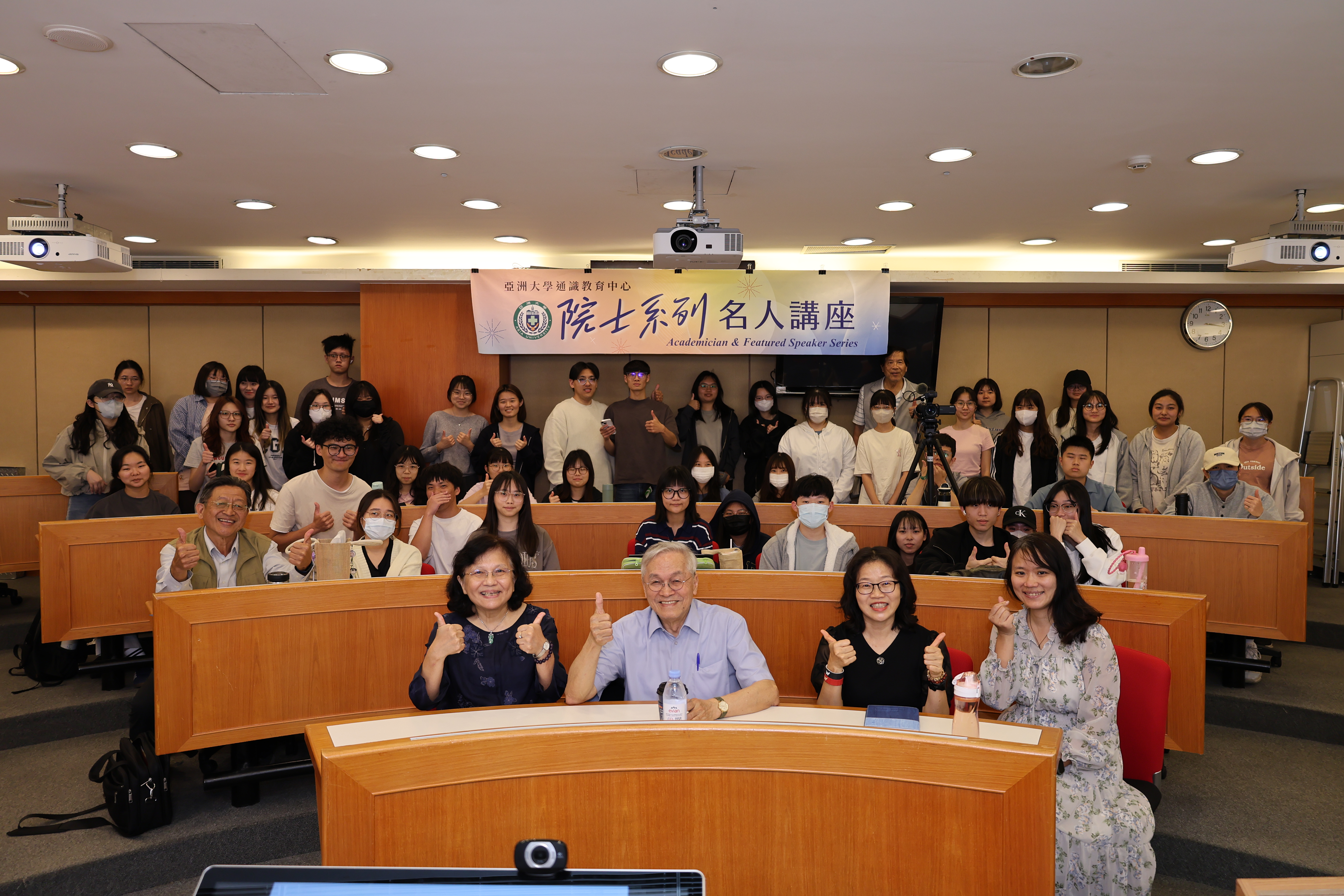 AU's "Dialogues with Academicians" lecture series hosted by the Center for General Education. Featured in the front row are Vice President Hsu-Fen Tsai (1st left), Academician Wing-Huen Ip (2nd left), and Center for General Education Director Shu-Chen Huang (2nd right), joined by participating faculty and students.
Asia University hosted a special lecture at Harvard Hall on March 25, featuring Dr. Wing-Huen Ip, a professor at the Institute of Astronomy, National Central University, and an academician of Academia Sinica. Titled "ET, AI, and Peace," the lecture embarked on a journey from the exploration of extraterrestrial civilizations to the implications of Artificial Intelligence (AI) and global geopolitics, examining how humanity can seek peace amidst competition and distrust.
Academician Ip pointed out that the scientific community has long been focused on the Fermi Paradox—the contradiction between the high probability of the existence of extraterrestrial civilizations and the lack of evidence for them. He introduced the Drake Equation to explain how scientists estimate the number of active, communicative civilizations in the Milky Way. While the discovery of over 6,000 exoplanets has broadened our understanding of the potential for life, the long-term survival of advanced civilizations remains highly uncertain.
Furthermore, he referenced the "Dark Forest Theory" from the Three-Body Problem, noting that in an environment lacking mutual trust, civilizations may lean toward preemptive strikes to ensure their own survival. Academician Ip suggested that this logic can be applied to current international relations, including nuclear threats, strategic competition, and information warfare, which collectively give the modern world the characteristics of a "Dark Forest."
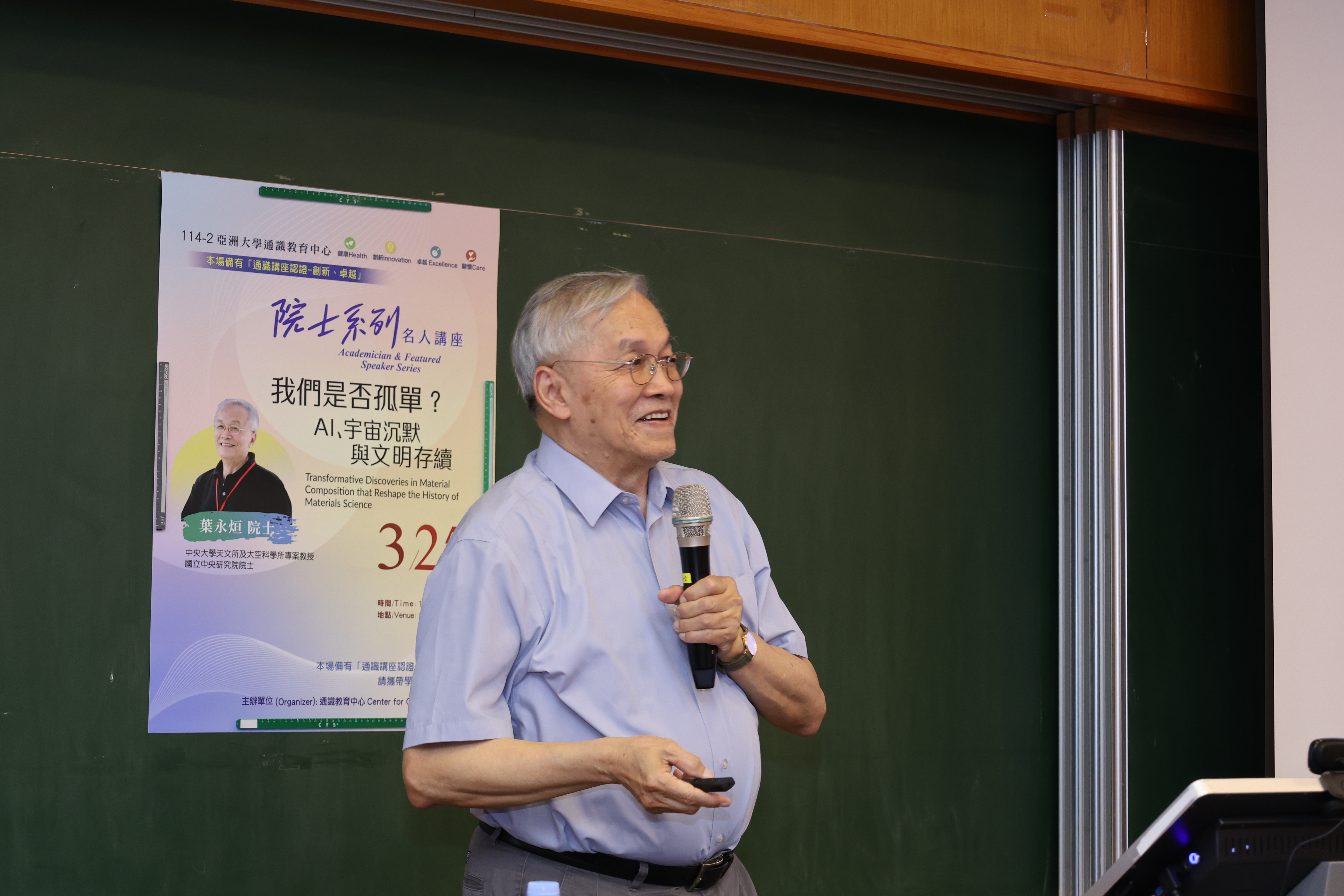 From the Fermi Paradox to "Dark Forest" geopolitics: Academician Wing-Huen Ip analyzes the survival of civilizations and humanity's future at Asia University
However, he emphasized that the real world has not fallen into total confrontation but exists in a semi-dark forest state. International institutions, economic interdependence, and cooperative mechanisms continue to function, serving as vital forces in mitigating conflict.
As AI develops rapidly, Academician Ip believes its impact is double-edged. On one hand, AI could be applied to autonomous weapons and information manipulation, increasing the risk of miscalculation and conflict. On the other hand, it can be used for conflict early warning, misinformation detection, and resource allocation, becoming a crucial tool for promoting peace. He posed a pivotal question: Should AI applications lean toward war simulation or peace deduction? He noted that the key lies not in the technology itself, but in how humanity governs it.
To this end, he proposed the concepts of transparent AI and human-centered AI. The former emphasizes system oversight and accountability, while the latter centers on human well-being and ethics. The combination of the two can create a systemic light source, establishing a foundation of trust in uncertain environments and preventing the world from sliding into total confrontation.
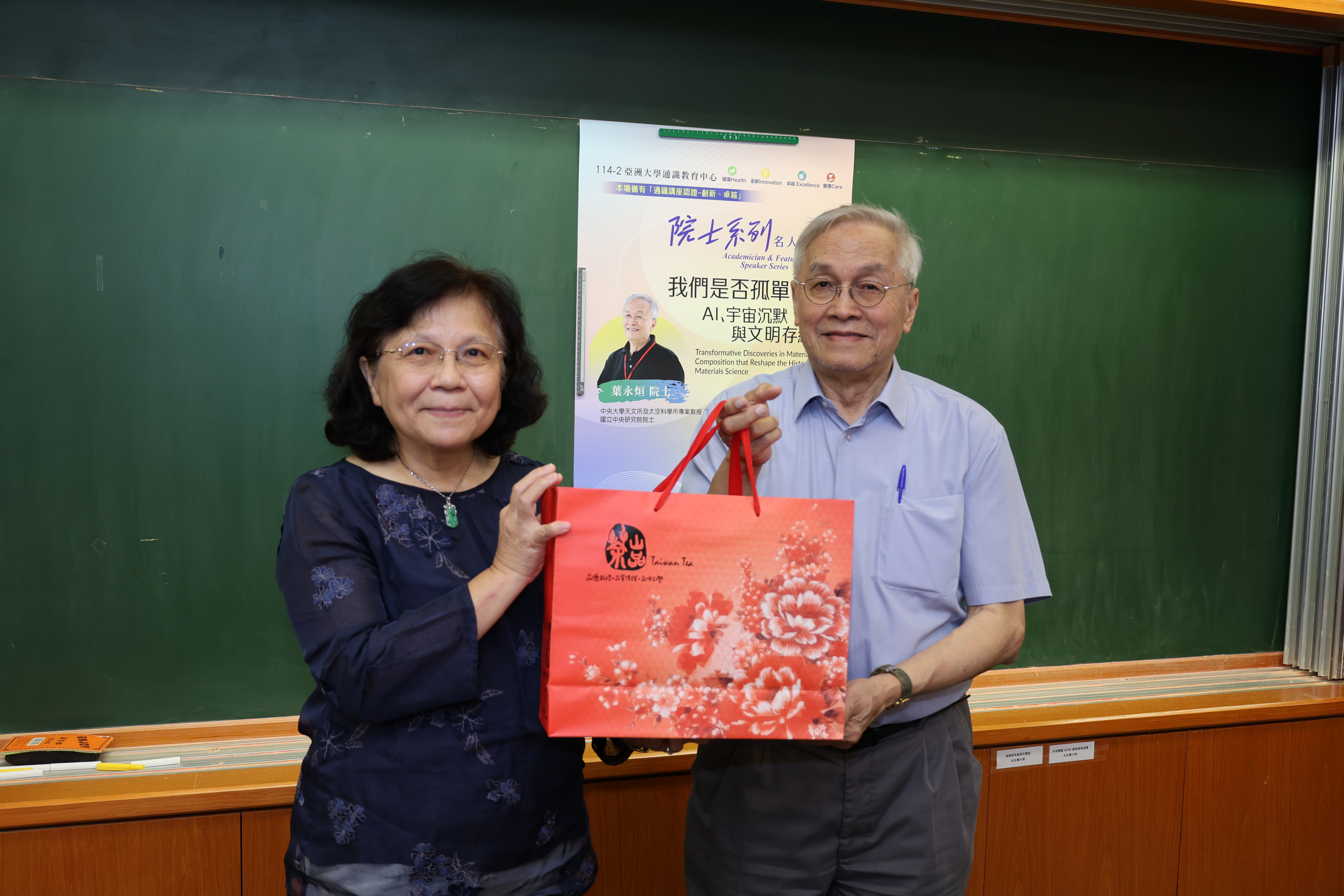 Asia University Vice President Hsu-Fen Tsai (left) presents a souvenir to Academician Wing-Huen Ip.
Regarding Taiwan's role, Academician Ip stated that Taiwan possesses distinct advantages in democratic systems, information technology, and healthcare. It can develop trustworthy AI governance models and exert influence on issues such as misinformation prevention and regional security. Through international cooperation and technical application, Taiwan has the opportunity to become a vital node of global digital trust.
In his concluding remarks, Academician Ip noted that if the world is indeed like a dark forest, humanity has an even greater need to maintain trust and cooperation through institutions and technology. The future of AI could either exacerbate conflict or become a key to promoting peace; its direction of development ultimately rests on human choice.
At the end of the lecture, Vice President Tsai summarized that as global conflicts intensify, our generation cannot ignore the threat of war. Education and AI applications can support these preparations and enhance social resilience, which is the objective Asia University aims to establish. Vice President Tsai also posed a question: "Since AI seems to know everything, what is left for us teachers to do?"
Academician Ip responded, "Using AI requires the ability to judge what is correct and what is not. AI can lean toward extremes, and that is precisely where those of us with experience can provide judgment."
Director Shu-Chen Huang of the Center for General Education also shared her insights: "I maintain a level of skepticism when asking AI questions, preferring to trust the background knowledge I have accumulated through reading. I believe AI represents a major impact, and since we are part of this era, we should not fear the future."
Academician Ip reminded the audience that in the face of an uncertain universe and rapidly evolving AI, human wisdom, ethics, and cooperation remain the most critical forces for maintaining peace and trust.
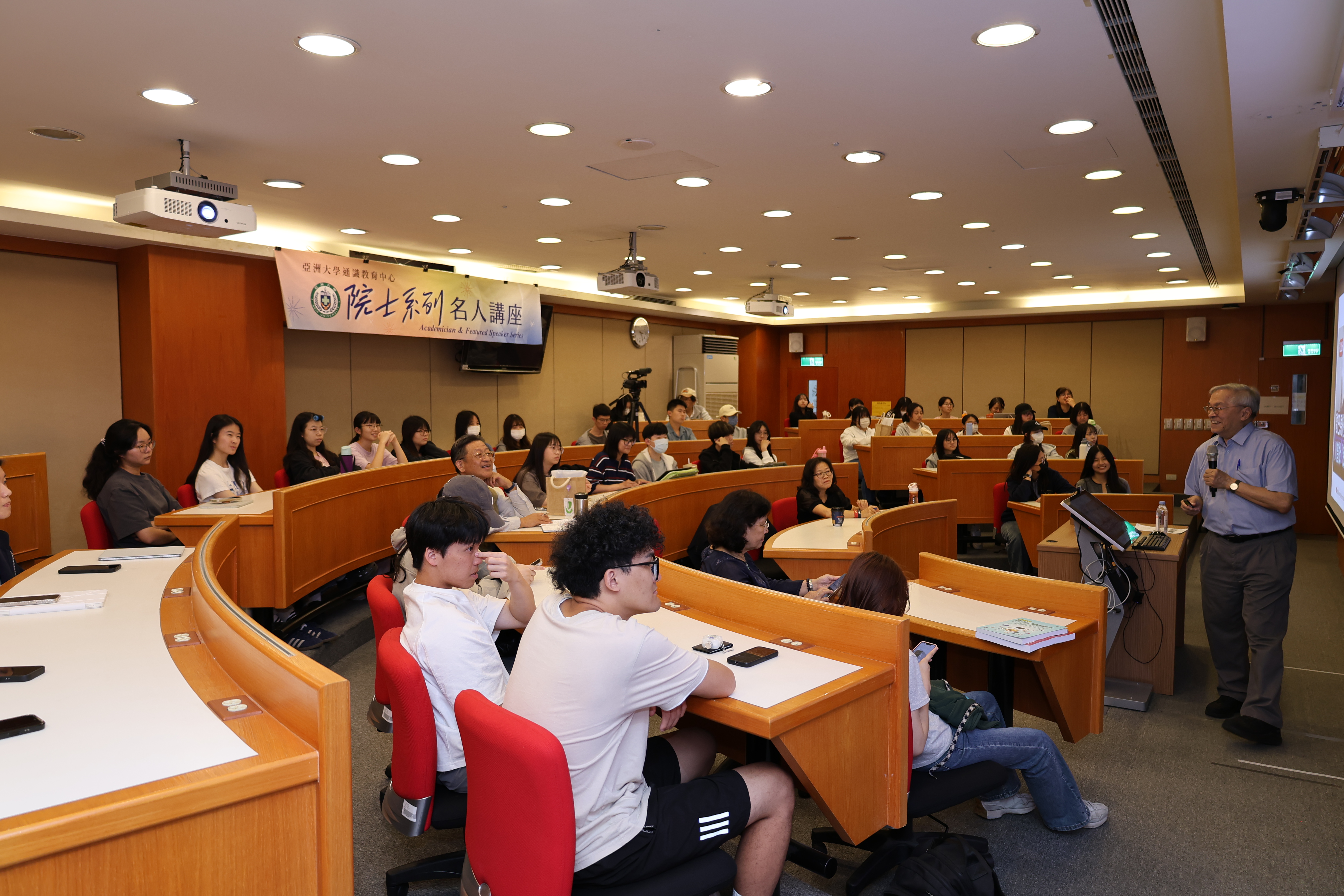
Academician Wing-Huen Ip of Academia Sinica delivers a lecture at Asia University, with students listening attentively.
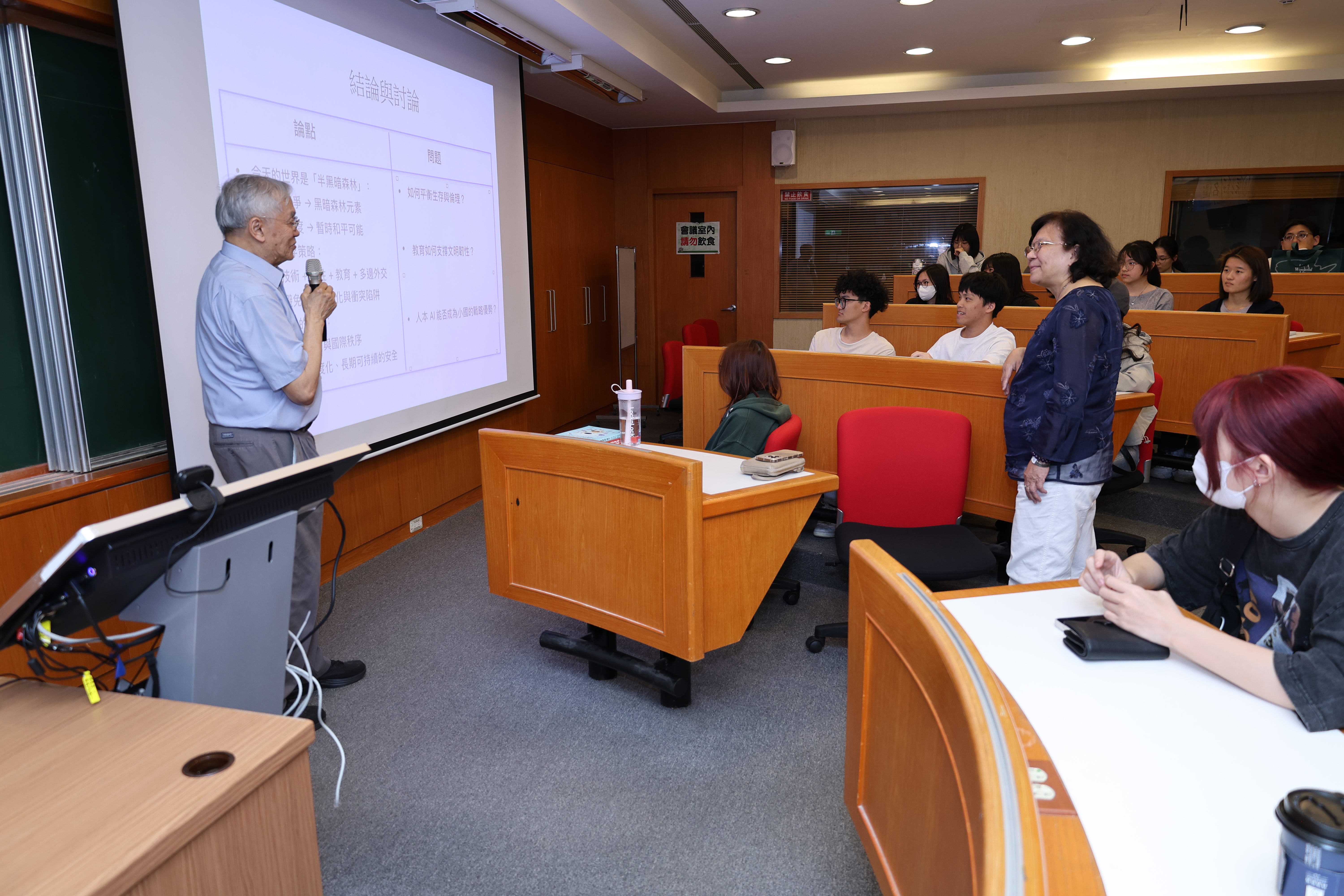
Students at the event asked questions enthusiastically, engaging in a deep dialogue with Academician Wing-Huen Ip that sparked a wealth of cross-disciplinary reflection.
