



Jonathan Lin Analyzes Global Industry Shifts: Applied Solutions Become the New Competitive Battlefield
 Analyzing AI-driven economic and industrial shifts, the keynote speaker explores new horizons opened by enhanced productivity.
"There may be a bubble in AI-related stocks, but there is no bubble in the AI industry!" declared Jonathan Lin, Partner at Andromeda Capital Partners Pacific and Adjunct Professor at National Taiwan University, during a address at Asia University on September 9. He pointed out that AI is sparking a new tech "supercycle." If Taiwan relies solely on its advantages in hardware and computing power, it will not be enough to capture the next wave of growth. The true new battlefield lies in addressing pain points across healthcare, finance, manufacturing, and other sectors—translating AI into actionable, value-creating applied solutions. As AI Agents rapidly integrate into enterprises, the critical trait for future talent is not merely "knowing how to use AI," but the ability to define problems, drive cross-disciplinary integration, and deliver solutions that AI cannot accomplish alone.
Asia University hosted its Distinguished Lecture Series for the first semester of the 2026 academic year on September 9, inviting Professor Jonathan Lin to speak on "AI-Driven Industry Trends and Competitive Strategies," analyzing the global AI competitive landscape from the frontlines of tech investment. Asia University President Jeffrey J.P. Tsai highlighted that Professor Lin brings extensive experience spanning technology, finance, investment banking, corporate management, and private equity. Having long participated in international tech investments and major mergers and acquisitions, his frontline insights on global AI competition offer a rare learning opportunity for faculty and students. Professor Lin noted that AI represents the next technological "supercycle" following mainframes, personal computers, the internet, mobile, and cloud computing—and its evolution is accelerating. Furthermore, AI Agents have transitioned from concept demonstrations to actual enterprise deployment, capable of executing data analysis, software development, and workflow automation, signaling AI's rapid shift into commercial applications.
Discussing Taiwan's competitive positioning, Professor Lin divided the AI value chain into four levels: "Accelerated Hardware," "Cloud Computing Power and Management," "Large Language Foundation Models," and "Applications and Solutions." He analyzed that the first three stages require massive capital, computing resources, and high technological barriers, leaving the market heavily concentrated among global tech giants. In contrast, the fourth level is deeply connected with local languages, cultures, industry dynamics, and regional needs—making it the exact battlefield Taiwan should pursue. Looking ahead, not everyone needs to build large-scale models; rather, the key is to truly understand pain points in healthcare, finance, manufacturing, and other sectors, turning AI into practical solutions.
 The venue for the Asia University Distinguished Lecture is packed to capacity, with faculty and students fully engaged in the analysis of global AI trends.
AI enhances efficiency while simultaneously reshaping the labor market. Jonathan Lin observed that while major U.S. technology companies have streamlined their workforces in recent years, their revenues and profits have continued to grow, reflecting how enterprises can leverage AI to generate higher output with fewer personnel. He cautioned, "The AI industry will thrive, but the human society brought about by AI may not necessarily be better." Moving forward, beyond enjoying productivity gains, society must confront the impacts on employment structures and social frameworks.
The Q&A session further focused on large foundation model development, sovereign AI, and educational transformation. Professor Lin noted that large models remain far from saturation. In the future, nations may develop "sovereign AI" tailored to their own language, culture, historical memory, and value judgments. Simultaneously, enterprises and institutions are likely to build smaller, specialized models to balance domain expertise with data privacy. Consequently, AI competition extends beyond raw computing power and model size to encompass the capacity for autonomous cultural and knowledge interpretation.
President Jeffrey J.P. Tsai expressed concern during the Q&A regarding how university education can accelerate its transformation amid rapid AI evolution. In response, Professor Lin emphasized that as AI grows more powerful, a solid foundation in computer science and information technology becomes even more essential; however, single-discipline training models must shift toward cross-disciplinary integration. President Tsai highlighted that Asia University has continuously driven campus-wide AI education reform in recent years—ranging from foundational AI literacy and domain-specific "AI+X" applications to graduation capstone projects and practical training—all aimed at bridging the gap between classroom learning and industry practice. Professor Lin reiterated that future students cannot merely "know how to use AI"; they must possess the ability to understand industry needs, define problems, and formulate solutions. Cross-disciplinary integration, practical judgment, and interpersonal communication will become core competencies that are increasingly difficult to replace.
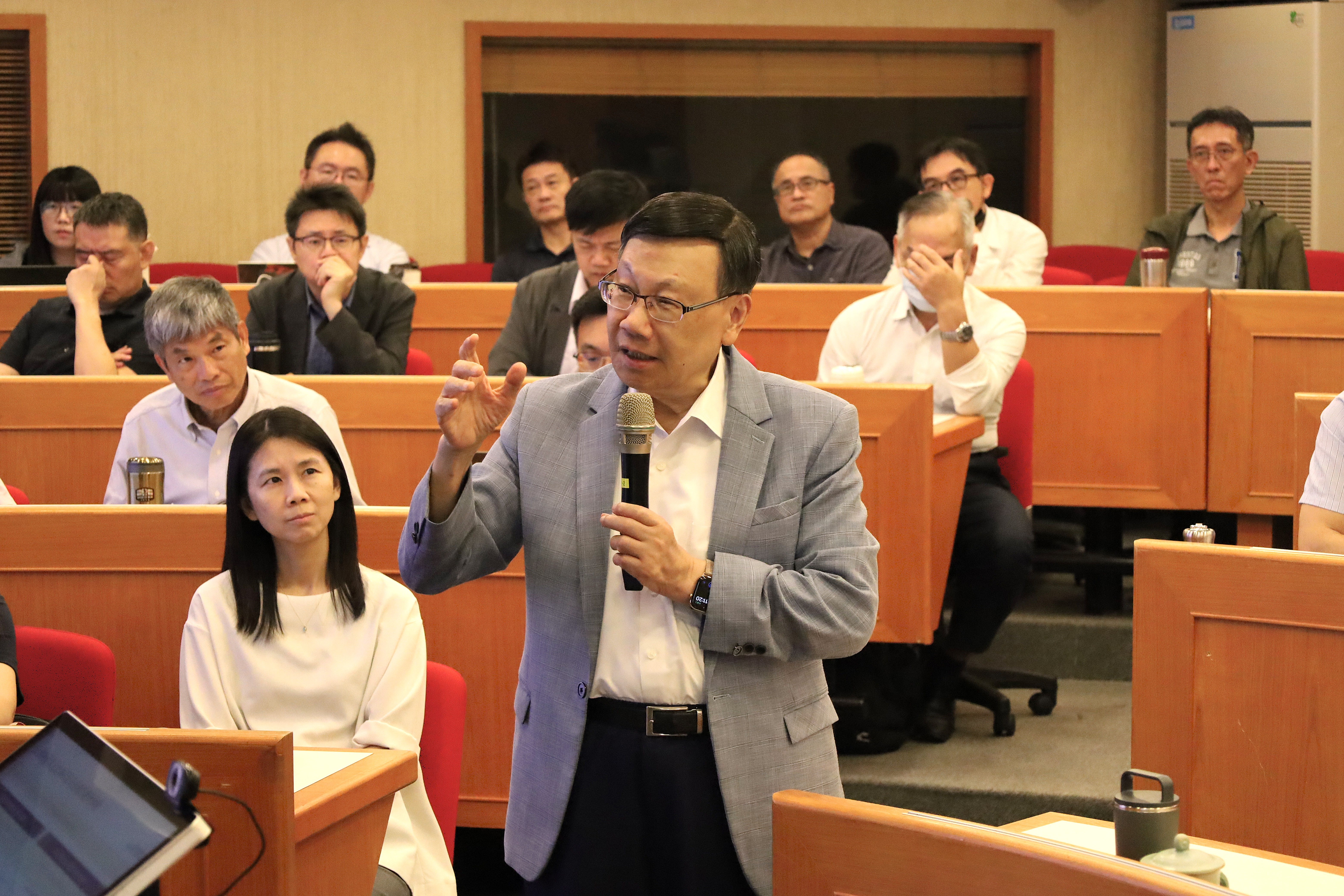 During the exchange, President Jeffrey J.P. Tsai raises a question, focusing on the transformation of university education amid the rapid development of AI.
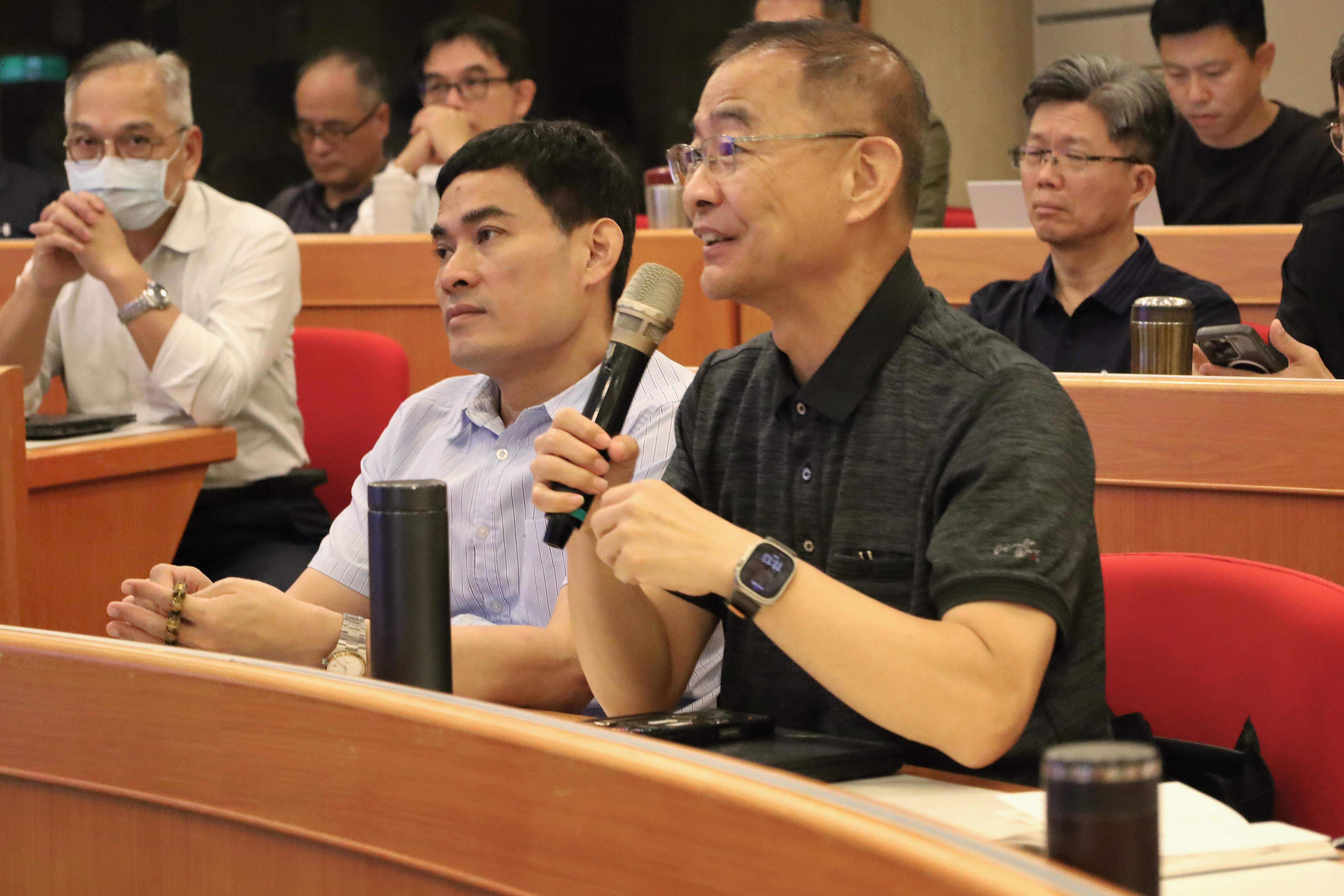 Attending faculty and university leaders ask questions enthusiastically, engaging in an in-depth exchange on AI computing power, industrial development, and future trends.
 Asia University President Jeffrey J.P. Tsai (left) presents a certificate of appreciation to keynote speaker Jonathan Lin (right) in gratitude for sharing global AI industry trends and practical insights.
 The Asia University Distinguished Lecture concludes successfully, with the keynote speaker posing for a group photo with university executives and faculty members.
