



The Q&A session at the forum sparked lively discussions, with Südhof revealing new key insights into "synaptic resilience" and "AI healthcare."
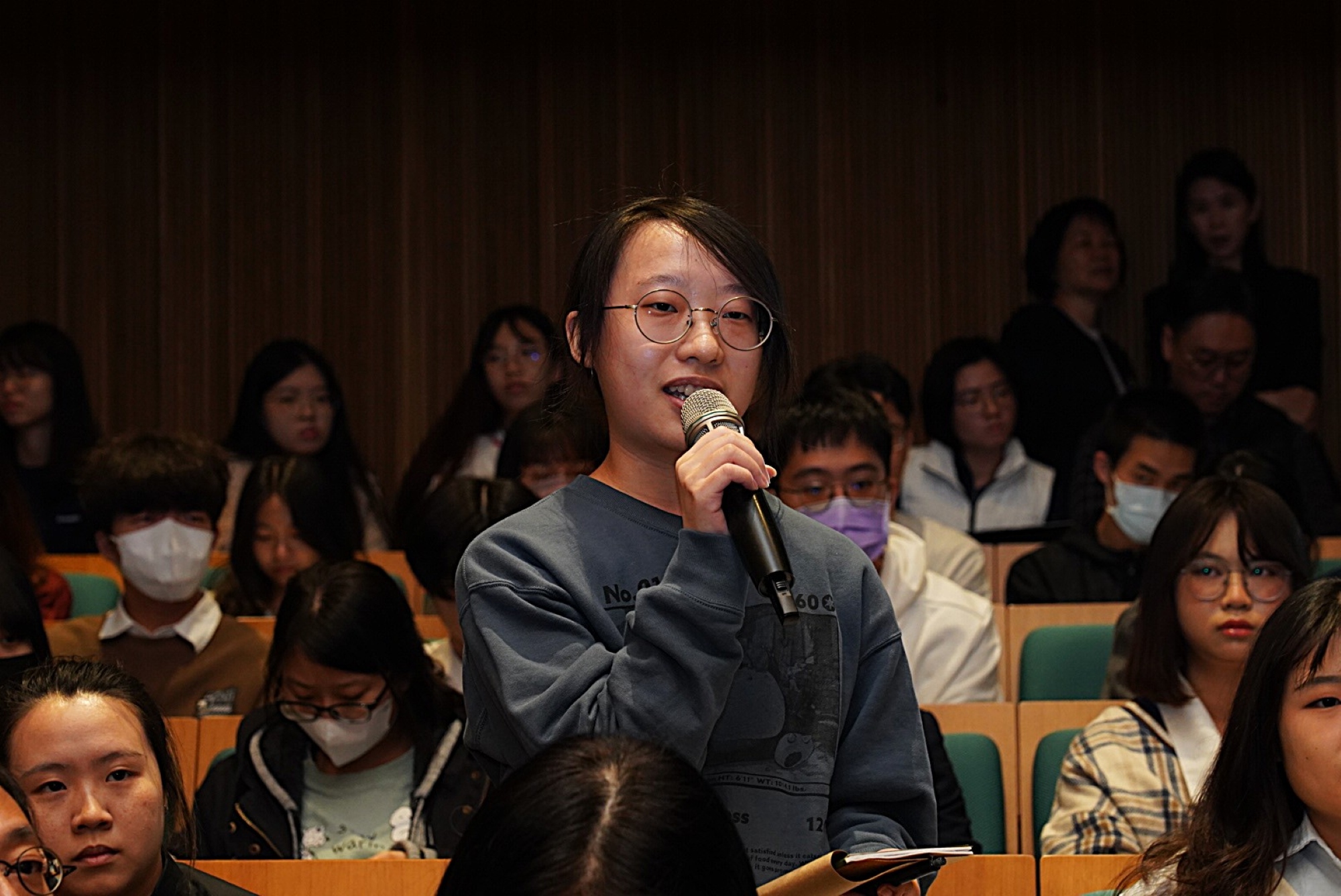 Students actively engage with the Nobel Laureate during the Q&A session, demonstrating strong intellectual curiosity
Asia University held the 2026 Nobel Laureate Master Forum on January 5–6, welcoming Professor Thomas C. Südhof, recipient of the 2013 Nobel Prize in Physiology or Medicine, for a two-day academic event marked by rigorous scholarship and vibrant dialogue. The forum brought together faculty members, students from multiple disciplines, and participants from institutions including Asia University and National Taiwan University, creating a rare cross-generational exchange at the frontiers of neuroscience.
Beyond the keynote lectures, the forum featured Professor Südhof’s presentation of a provocative hypothesis related to Alzheimer’s disease—the “Aβ sink hypothesis.” Challenging the traditional view that amyloid-beta (Aβ) plaques are purely toxic, Professor Südhof suggested that Aβ may play a functional role in normal synaptic activity. He proposed that plaques might act as “sinks,” sequestering excessive free Aβ and inadvertently lowering the concentration needed for healthy synaptic function. This perspective may help explain why many plaque-clearing therapies achieve only modest clinical benefits.
The forum also highlighted advances in translational medicine, including a presentation by Dr. Der-Yang Cho, Superintendent of China Medical University Hospital, on an AI-driven oral drug candidate, PAA, underscoring the growing integration of artificial intelligence in biomedical innovation.
A High-Impact Q&A: Science, Integrity, and the Human Side of Research
The most anticipated segment of the forum was the extended Q&A session, during which students from psychology, biochemistry, healthcare management, and related fields posed incisive questions that went well beyond technical science. Rather than offering scripted responses, Professor Südhof and fellow experts addressed topics ranging from scientific integrity and career setbacks to AI applications and synaptic mechanisms underlying mental disorders, turning the session into what many participants described as a "master class in scientific life."
Earl Mallari, a psychology student from the Philippines, asked how young researchers should balance efficiency and integrity as AI reshapes research practices. Professor Südhof responded candidly, cautioning that AI-generated content is often unreliable and may incorporate misinformation from predatory journals. He emphasized that tools such as ChatGPT should serve as assistants, not authors, warning that excessive reliance on AI in writing could jeopardize academic careers.
Kai-Li Lin, a student from the Department of Healthcare Management, raised a deeply personal question about overcoming major setbacks in research. Professor Südhof shared his own experiences, reflecting on the importance of self-examination and resilience. He noted that despite challenges, his enduring motivation has been a simple conviction: that science matters and contributes meaningfully to society.
From Molecular Mechanisms to Mental Health
Edis, a senior student double majoring in Psychology and Biochemistry, raised questions about translational research, focusing on the challenges of moving from basic science to clinical applications. Professor Südhof expressed concern about pressures to move too quickly into clinical trials without sufficiently robust preclinical data. Fellow scholars added that the complexity of neuron–glia interactions demands comprehensive, system-level approaches.
Advanced students also probed the role of synaptic molecules such as neurexins in neurodevelopmental and psychiatric disorders. Professor Südhof affirmed that accumulating evidence links mutations in neurexin genes to conditions such as autism and schizophrenia, highlighting the importance of understanding synaptic resilience as a future therapeutic focus.
Discussions further addressed combination therapies, lifestyle factors, and non-pharmacological interventions. Panelists agreed that, much like cancer treatment, combination approaches will likely become the standard for neurodegenerative diseases, provided they are grounded in solid mechanistic understanding.
Passing on the Core Values of Science
The forum concluded with sustained applause. Asia University President Jeffrey J. P. Tsai remarked that the event not only showcased Taiwan’s growing strength in neuroscience research, but also demonstrated how meaningful dialogue between Nobel Laureates and young scholars can transmit the core values of science—embracing new technologies such as AI while remaining firmly committed to fundamental mechanisms, scientific integrity, and service to society.
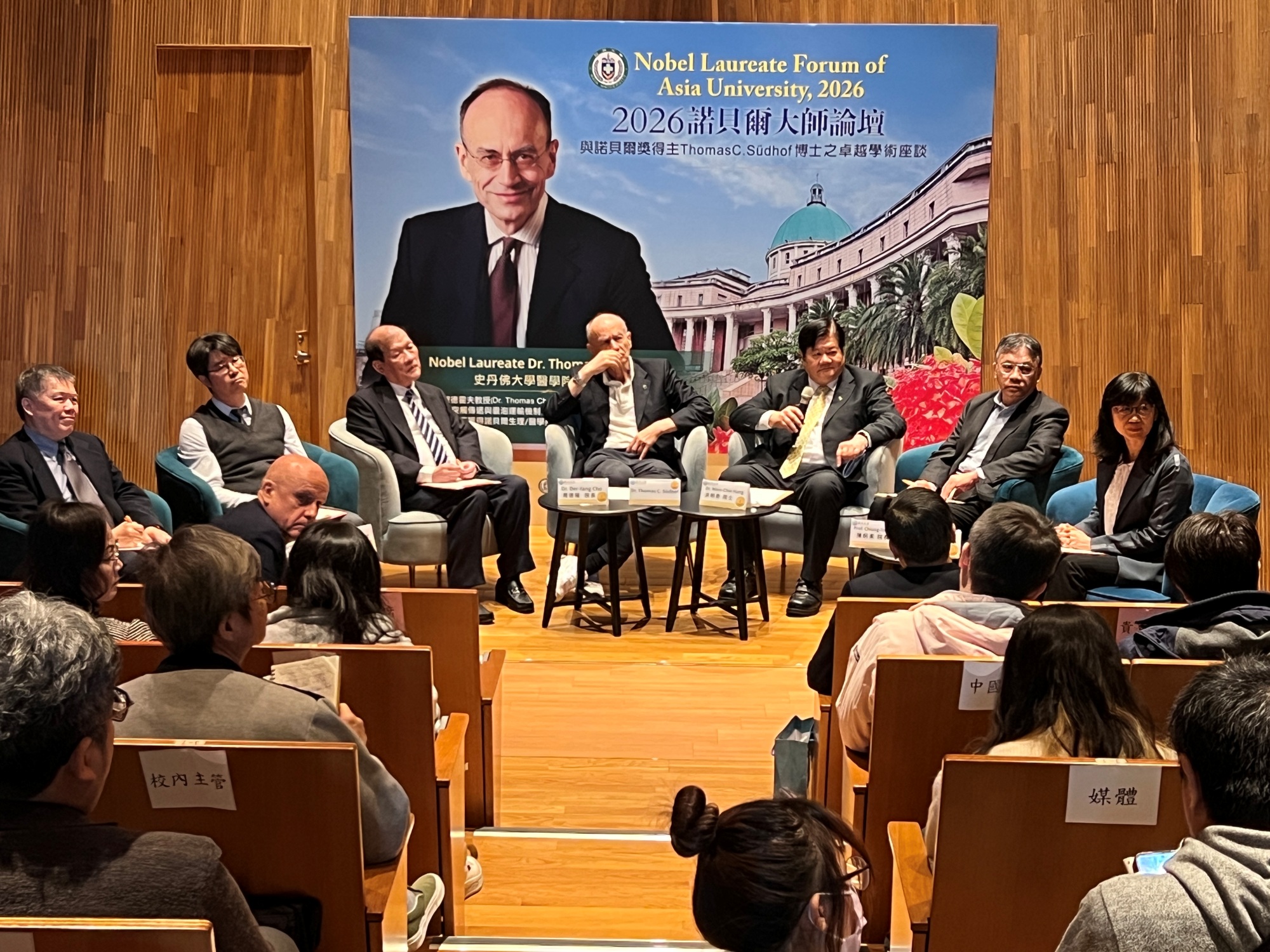 Professor Südhof joins Dr. Der-Yang Cho and fellow experts in a panel discussion on emerging trends in neuroscience and medicine
