



Integrating the Research Energy of Three Colleges: Linking Technological R&D, Clinical Validation, and Product Application
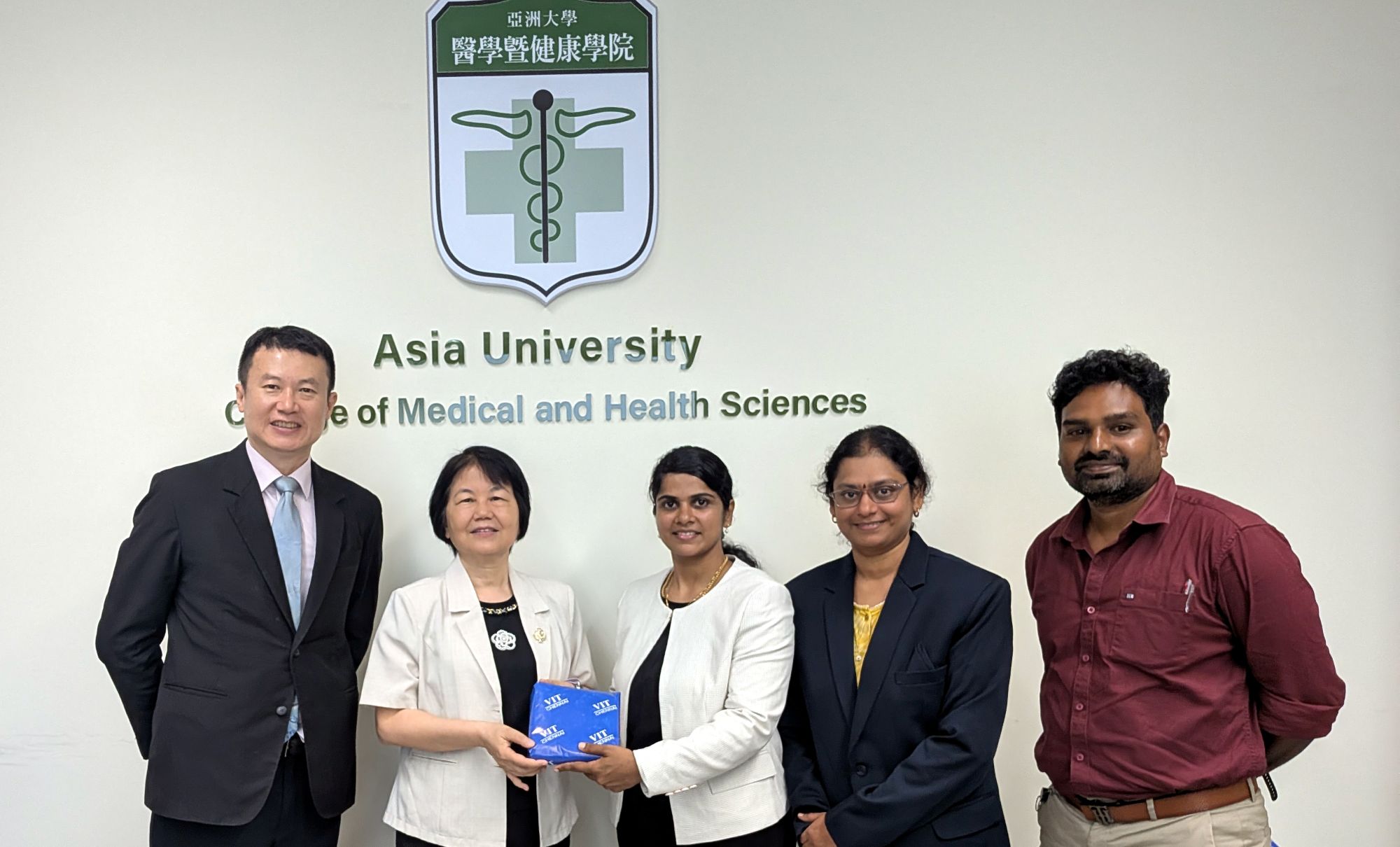 This photo shows Dean Hu Shu-zhen of the College of Medical and Health Sciences at AU exchanging souvenirs with representatives from Vellore Institute of Technology, Chennai, focusing on collaborations in medical quantum AI, medical image analysis, and clinical validation.
Asia University has partnered with the Chennai Campus of Vellore Institute of Technology (VIT Chennai), India, integrating research energy across medical and health sciences, creative design, and information engineering. The collaboration focuses on quantum artificial intelligence, medical image analysis, clinical decision support, and smart medical device development. Both parties will focus on algorithm R&D, clinical validation, and product design as their primary cooperation pillars, while proposing joint research, faculty-student exchanges, and industry-academia linkages to promote the transition of smart healthcare technologies from academic research to clinical and industrial application.
The VIT Chennai delegation visited Asia University on July 2, 2026. The visiting members included Dr. Sheen Christabel Pravin, Dr. Kiruthika Venkataramani, and Dr. Abraham Sudharson Ponraj, who is currently serving as a visiting scholar at Asia University. Initiated by Professor Long Xi-wen, Chair of the Department of Creative Product Design at Asia University, the delegation held exchanges with the College of Medical and Health Sciences, the College of Creative Design, and the College of Information and Electrical Engineering, seeking cross-disciplinary entry points spanning clinical needs, engineering technologies, and human factors design.
During the exchange, the VIT team shared the research achievements of MEDxAI Innovations Private Limited, a startup incubated by their university's incubation center. These highlighted projects included CerviLens, an AI-powered cervical cancer screening platform; ThoraxIQAI, a chest X-ray image analysis system; Quantum PharmX, a quantum AI drug discovery platform; and MindfulMe, a smart health monitoring system, demonstrating the vast potential of artificial intelligence in disease screening, medical imaging, drug R&D, and health management.
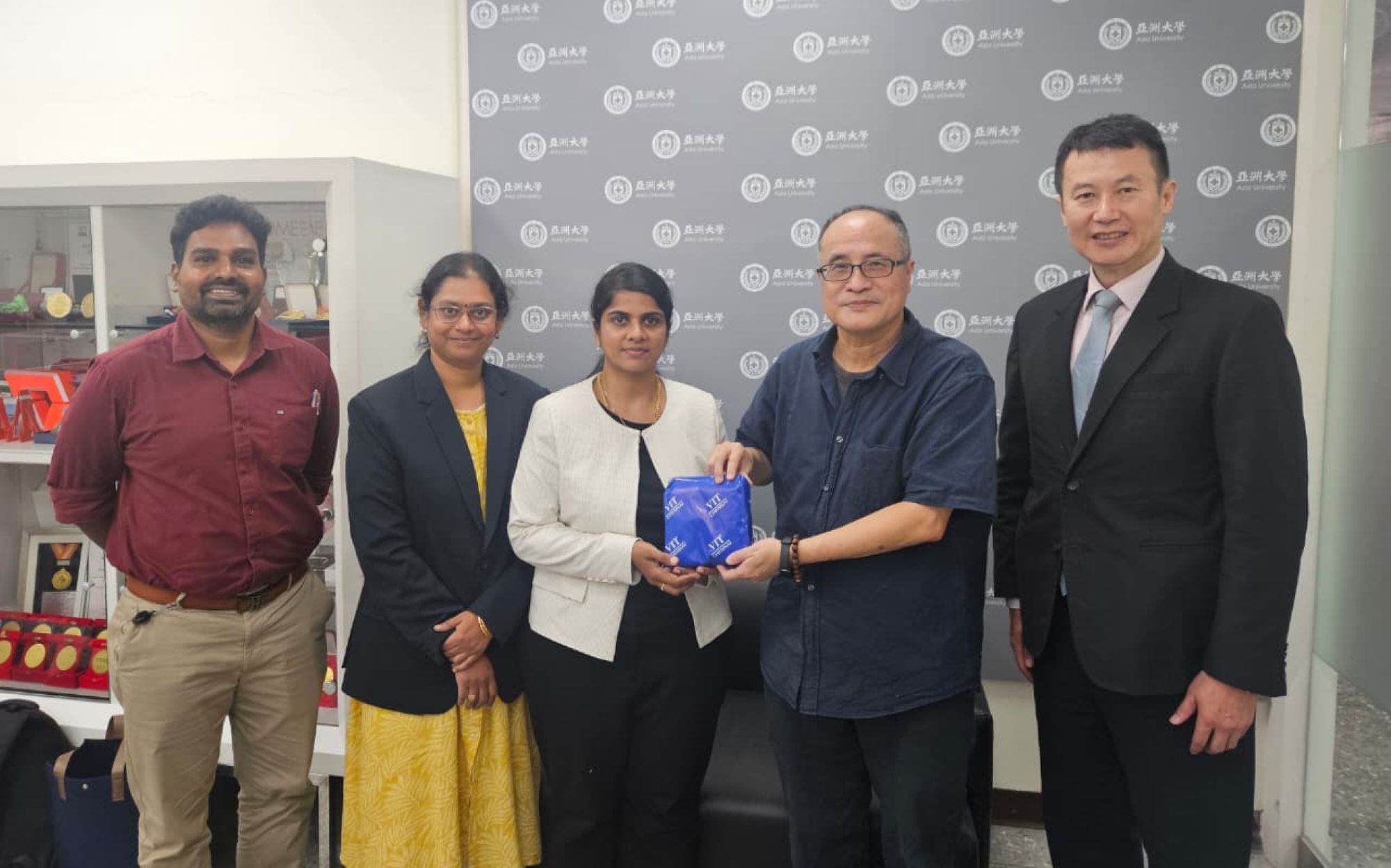 Professor Yao Tsun-hsiung (2nd right), Dean of the College of Creative Design at AU, engages in discussions with scholars from VIT India to explore product development strategies that integrate design thinking, human factors engineering, and smart healthcare.
Regarding clinical and product development aspects, Professor Hu Shu-zhen, Dean of the College of Medical and Health Sciences, exchanged views with the delegation on medical image interpretation, clinical decision support, medical device validation, and commercialization. Meanwhile, Professor Yao Tsun-hsiung, Dean of the College of Creative Design, approached the discussion from the perspectives of design thinking and human factors engineering, exploring how to integrate the needs of healthcare professionals and patients into product development to enhance operational convenience, user experience, and clinical applicability of medical equipment.
Professor Ching-Hsien Hsu, Dean of the College of Information and Electrical Engineering, focused on quantum artificial intelligence, smart systems, and medical engineering during discussions with the delegation. The VIT scholars noted that certain regions in India still face a shortage of high-end medical imaging equipment. Consequently, they are actively applying AI algorithms and software platforms to maximize the analytical and diagnostic value of existing medical data. This experience offers concrete avenues of cooperation for both sides in advancing medical image analysis, clinical decision-making systems, and joint international research.
The delegation also held a symposium with 28 international students participating in the Ministry of Education's Taiwan Experience Education Program (TEEP), sharing the journey of medical technology and AI startups as they progress from academic research and technology development to clinical application and commercialization. Asia University President Jeffrey J.P. Tsai stated that this exchange has successfully linked the research energy of both universities in smart healthcare, quantum AI, innovative design, and international talent cultivation. In the future, the university will continue to propose joint research initiatives, faculty-student visits, and industry-academia cooperation to deepen the connection between Taiwan and India in higher education and medical technology.
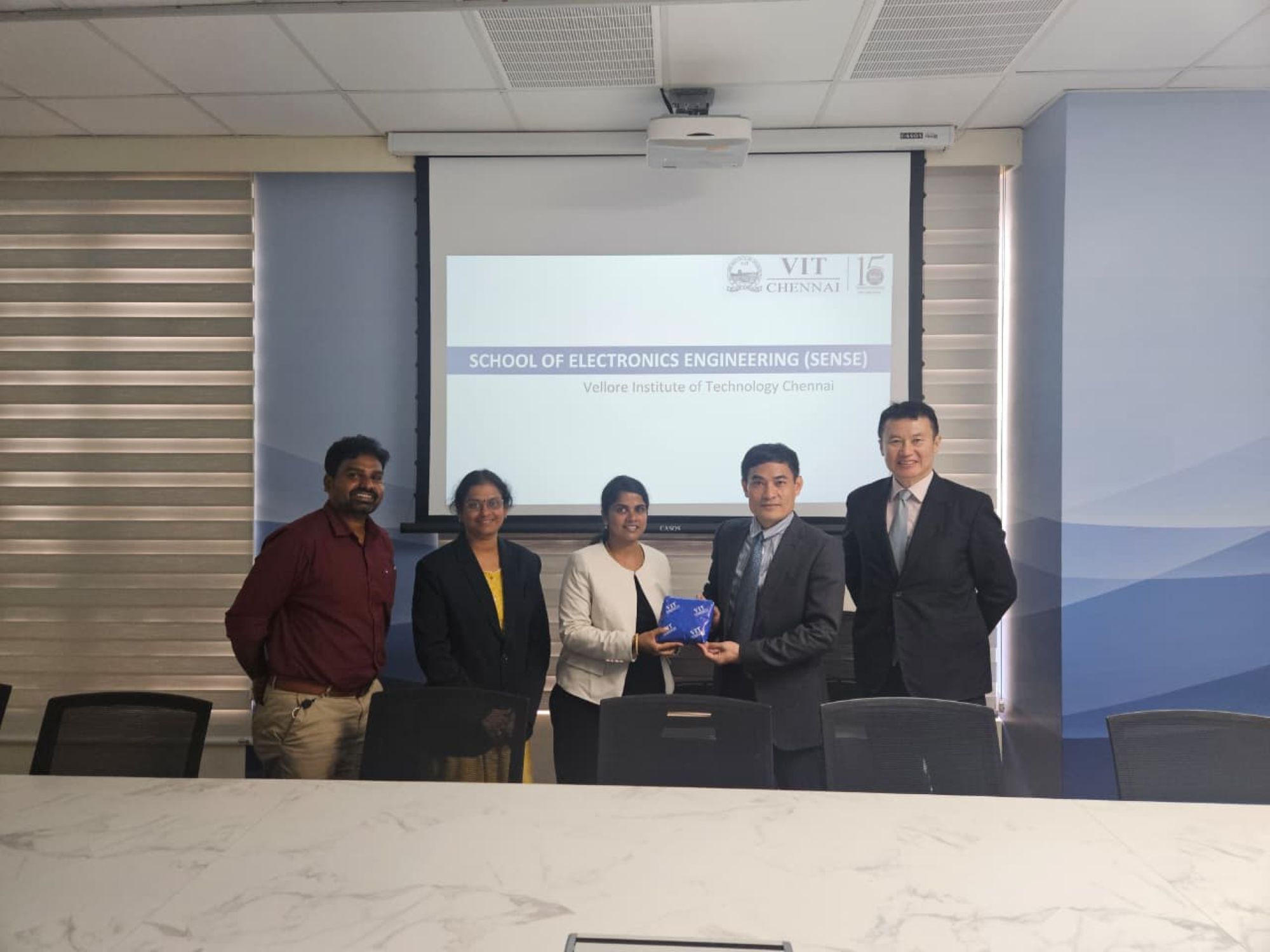 Professor Ching-Hsien Hsu (2nd right), Dean of the CIEE at AU, poses for a group photo with the scholar team from VIT, following in-depth discussions on quantum AI algorithms, smart systems, and mitigating regional healthcare resource disparities.
 Scholars from VIT India were invited to participate in a symposium hosted by Professor Long Xi-wen (3rd right), Chair of the Department of Creative Product Design at AU, as part of the Ministry of Education's "Taiwan Experience Education Program" (TEEP), where they shared experiences in medical startups and commercialization with 28 international students.
